


From my experience with the Habu 2 and Rebel 70, first I usually lower my throttle to 50-65% come across the field. As I line up with the runway, I would lower the throttle to 25-35% as I make my approach and let it glide with a smidge of elevator, keeping the nose gear up. Once when it touches the ground, I cut off the throttle.
Hope that helps.
-
That's one thing I loved as a Navy pilot. You always lived near the base and OLF training fields weren't too far away. Usually, we could fly at them on the weekends/holidays and after 1700 when most closed for the day. I've been out for a while and I heard the Navy turned all that off after 9/11, though.Leave a comment:
-
Yeah back pressure is up elevator. Get your attitude right and land it with the throttle. There are always exceptions to this and there are no hard and fast rules that work every time. Just develop a technique and be flexible enough to adapt to whatever the conditions are that day.
Nothing beats practice. I've been weathered-in last week or so.Leave a comment:
-
-
Flaperon's are great as long as you don't use too much deflection... 15-20 degrees makes a big difference, but after that REALLY hinders roll control IME. Start with little deflection and work up slowly.
As previously mentioned, a FL:EL mix is key when setting a plane up properly.Leave a comment:
-
Update: 7 flights on my FMS 64mm F-15 today..... 7 landings - all "good" or better! No hopping, no missed approaches. Just 7 quality landings!
Now on my F-18.... its a work in progress. It comes in really hot. Some guys at the field suggested flaps. or flaperons, so I have some research to do.
Leave a comment:
-
-
Spent some time at t he field yesterday practicing what you all suggested and made some decent progress. A couple of real nice landings and some, well, usual for me. Learned a lot though. Especially about controlling speed on final and about staying off the elevator at/after landing to avoid the hops.
Hopefully more practice time this weekend.Leave a comment:
-
-
-
Leave a comment:
-
No matter what our opinions are on how to land one of these EDF's you will have to find what works the best for you, because it has a lot to do with your runway, how long is it, wide, do you have a clear approach, every EDF lands different so you need to find out how to fly your jet dirty. Take off, leave your gear down, flaps down if you want, fly it this way the whole battery or several batteries if you like, get used to what you need to do to keep it in the air without a stall, of course do this a few mistakes high, make several approaches or circuits around your field using the throttle and elevator to keep it in a nice nose high attitude, once your comfortable with how to slow flight your jet then on one of your approaches just lower your throttle and with a little elevator back pressure let it glide in and like others have said, do not flare to early, you have to hold the flare with elevator back pressure and it should settle in on the mains first then the nose, then you can relax the elevator and roll out. So what I'm saying is, learn your EDF's slow flight envelope and landings will be so much easier.Leave a comment:
-
Thanks for the input on landings everyone. After reading all this and considering my recent efforts, I think a major issue I'm having is using too much elevator. Gooniac, what you describe in your video as the death hop is what I'm experiencing.
Kloverzero is right... I need to practice, practice, practice.
Like Seaviper mentioned, I think in some instances, I flare too high. One thing to clarify Seaviper... when you talk about keeping a little back pressure, is that a touch of up elevator, not down?Leave a comment:
-
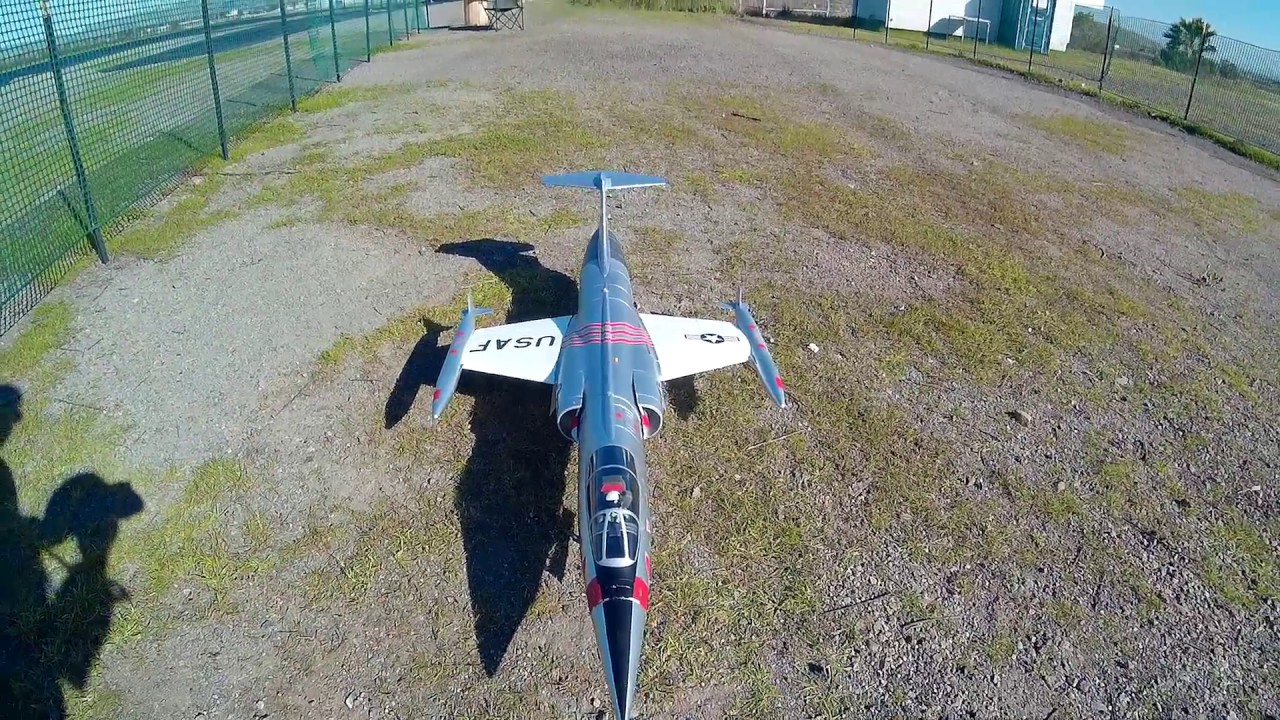
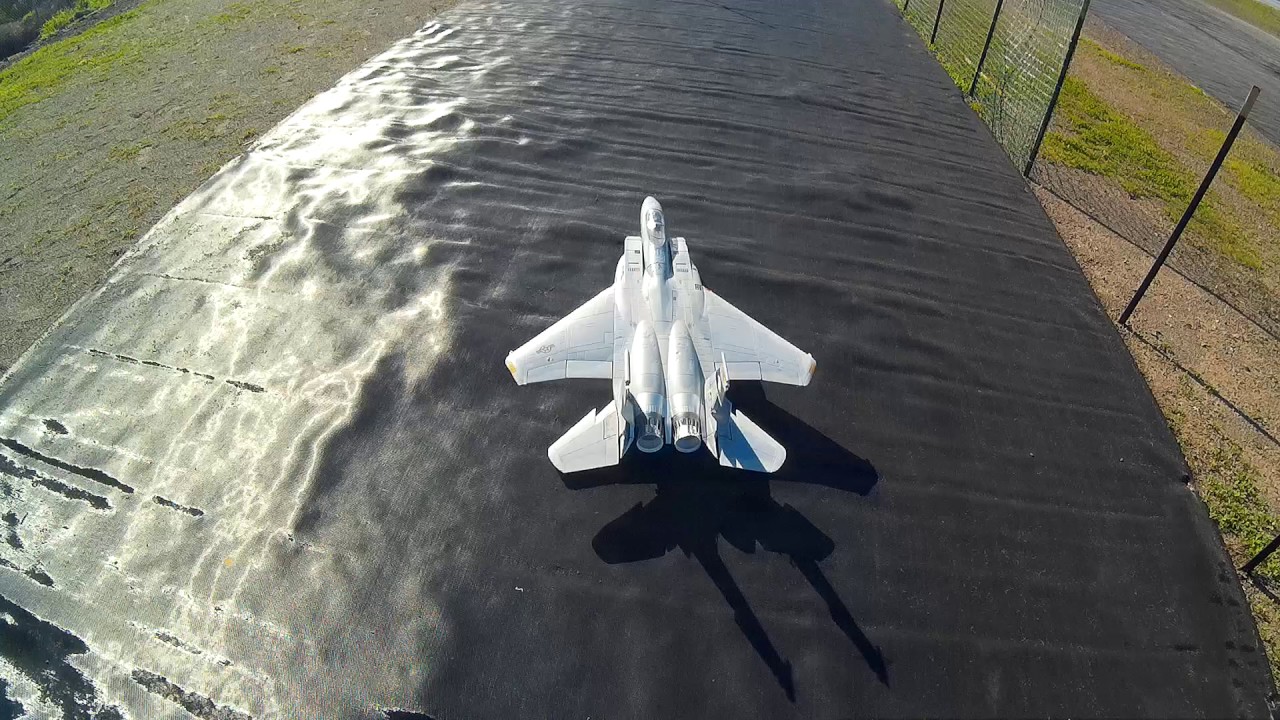
Most jets will not glide... I did a mini how to on how I fly my F-104 which is what you should use for all edfs. You need to be on the power with flaps down on most big edfs... I also have a video of a short final approach due to weird wind conditions with my F-15. But both show you how to land the way that I normally do...The most important thing. Get set up in your landing attitude and then do not fiddle too much with the elevator. Use the throttle to control your rate of descent. In both of these videos you can hear me working the throttle before touch down.
Leave a comment:
-
Bleed off as much speed as possible without stalling the plane, and try to keep your energy up. Depending on how long of an approach you can make at your particular field, the approach should be as shallow as possible. Try to fly the plane parallel with the ground and use the throttle to control the sink rate. Elevator input should be the the last thing used, and only to flare the plane just before touchdown. Some of my jets like it when I kill the throttle a foot or two off of the ground and glide it the last few feet, and some do not. As with anything, the more that you practice, the better you will be at it, and every jet lands differently. When I first got into flying the EDFs, I would do repeated touch and go's to get used to the sink rate of each particular plane. Good luck, and Happy Landings!!!!Leave a comment:
-
Very few of my EDF jets will "glide" in for a touchdown. They need to be "flown" right to the ground with some power. The bounce is usually because the plane stalls at the last moment and touches down a bit hard and at a steep angle, then it goes for air again.Leave a comment:
-
I agree with Pete. Use throttle to touchdown. It's much more controlled. Also, don't flare 6ft off the ground. Try to flare when you are about 2ft high instead.
Another thing is don't let go of or push the stick fwd after touchdown. This can contribute to hopping. Keep some back pressure on rollout.
One more thing about jets. They often have a higher wing loading than props. This means they can develop some high sink rates on final among other things. Be careful of sink rate. That will make you bounce and break things.Leave a comment:






Leave a comment: