



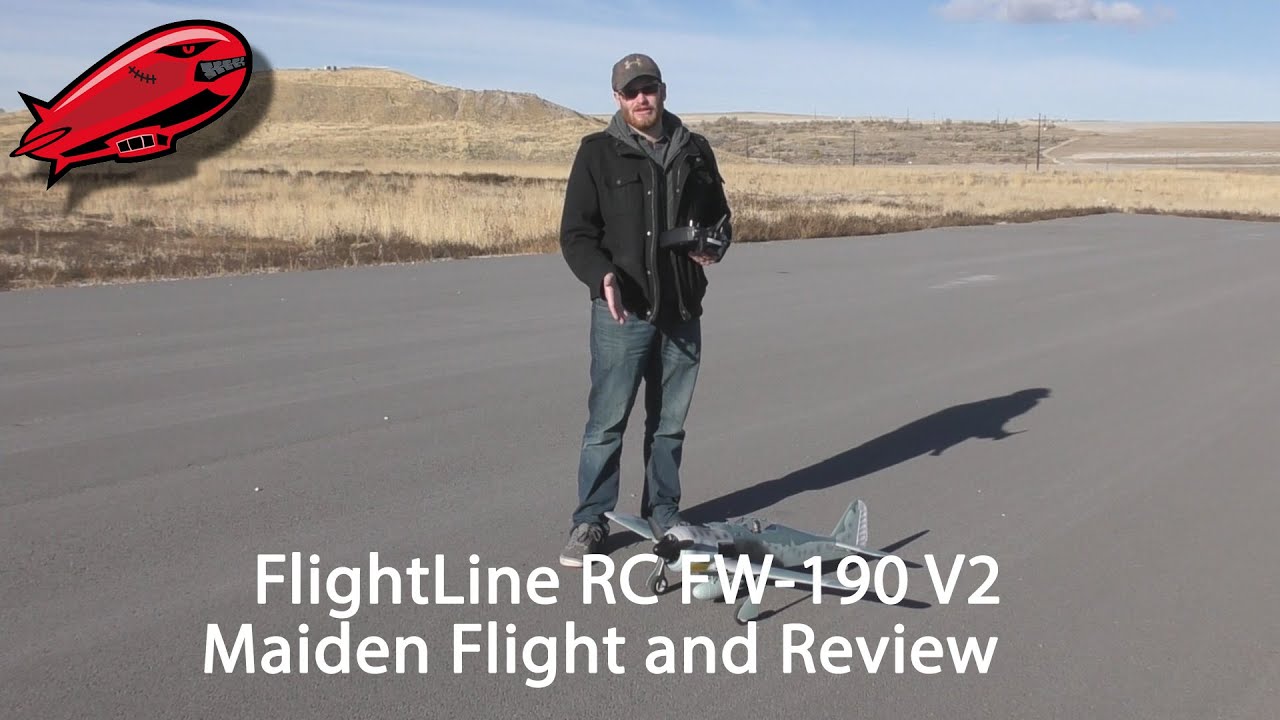
The maiden of the Flightline FW-190 was terrifying because I didn't stop and read the manual all the way and double check my throws! Please enjoy my maiden of this plane, also have you guys done this mistake before and how did it turn out?
-
Welcome magergamer! The general rule of thumb is set your control throws and your cg to the manufactures specs and use low rates for your maiden. Once your comfortable with the plane then you can adjust things to your personal likeing. I generally always use low rates for takeoff and landing except the rudder which I keep in high rate for all my tail draggers for more control and rudder authority. -
I have a bad habit of flying with whatever throws it has naturally then adjusting if they give me trouble. After watching that takeoff I may have to reevaluate...
Comment
-
Just dial in expo and adjust after the maiden.
Mike\"When Inverted Down Is Up And Up Is Expensive\"Comment
-
I set up 3 expos on dual rates for the maiden. Full throw available all 3 "dual rates" Very fast to deal with an oversensitive model, just tick the switch.
Common trims on the test flight so once I have dealt with any out of trim, its at least close enough in all 3 rate settings.FF gliders and rubber power since 1966, CL 1970-1990, RC since 1975.
current planes from 1/2 oz to 22 lbsComment
-
+1
.....
JoePlatt: fw190d9 Dynaflite:PT-19 IMP:Macchi202 ESM:fw190 ESM:Tank, Hien Jackson:DH-2 BH:macchi200 Extr:fw190 Holman:me109F H9spit2 FL:F4u,spit 9 FW:me262 GP:us60, Stuka, cub, F4u PZ:me109, albi EF Hurri, T-28 FMS: 2x fw190, me109 Lone Star:Skat Kat RSCombat:2xfw190d9Comment
-
I am the same way with Tate and MikeT and usually just need to adjust expo further. It was a surprise the amount of throws this planes has. The reason why it surprised me was coming off the last Flight Line plane which was the Bearcat and that plane is amazing! I didn't pay attention to the manual's settings the Bearcat up and it turned out really well.Comment
-
I hadn't yet figured out how to adjust the rates on my TX before the maiden flight of the eFlite Cherokee, and yeah, it was a lot like that, only I didn't try anything like loops or rolls. I was having enough trouble just keeping it in more or less stable flight, as the slightest movement of the stick would result in a lot more movement than I wanted.
My nerves were pretty much shot by the time I landed, though, ironically, the only damage to the plane occurred during taxiing after the flight, when the front wheel caught on the edge of the concrete slab of the ramada, and broke the nose gear steering link.
I now have the rates at 60%, though I think I could reduce them a bit more, and still have ample control of the plane.Comment
-
That's when I like to dial in about 30% expo, it still gives me the full range of control with more finite control near the center of the stick. Just don't do like a friend recently did and set your expo to 100%. This results in nearly zero control until you reach the end of the stick at which point you get full deflection. I still can't believe he got that plane back safe.
Comment
-
Yeah, I think I'm going to play with the expo a bit next.Comment
-
Hey I love my expo! I fell like I have so much more control over the plane. I wish I could set a default 30% on all new models in my transmitter. Otherwise I get so anxious to fly that I forget to set it and we end up with a squirrel in the air before I remember again.Comment
-
Thanks for posting magergamer, glad you got her down and had the opportunity to get it right for another goComment
-
Like Tate, I do not set throws in the transmitter, nor do I use dual rates or expo, unless flight data shows it to be necessary. I have the sticks on my DX9 as tight as they can get without popping a spring. This helps to avoid over controlling a model no matter what the throws are. I learned to fly in the late 70's and early 80's, and back then, you had two sticks and movable trim tabs. No screens or fancy gizmos. I do not recommend my method of flying to anyone though. After 35 years, I don't want to fiddle with electronics, I just want to build and fly. You should take whatever precautions you feel are best, and that you are comfortable with. I also highly suggest developing a "maiden routine" where by you always set things, apples to apples of course, up the same way, and develop a flight routine for maidens that will give you a very good idea of the balance and trim properties of the plane. For example, once I have a model off the ground, the first few circuits are to establish roll and pitch axis for level flight. Once that is done, I will turn the plane at 90 degrees when it is directly n front of me, so that I can see what it is doing in the yaw axis, and correct as necessary. The next pass, I turn upwind, 75% throttle, climb at a 45 degree angle, and roll the model inverted. Hands off will tell you the balance of the model. If the nose drops, it is nose heavy, if it goes to the vertical, tail heavy. Balance can then be adjusted on the ground. As I am usually at a pretty decent altitude after this has been done, it is time to test the flaps (if installed) to make sure the model doesn't do anything crazy. So, these are a few pointers for maidens. Happy Landings, and may your landings always equal your takeoffs.Comment
-
I set the max throw mechanically to where 100% on the TX is what I THINK will be correct (often less than the instructions recommend) for my style of flying.
After test flights, I adjust mechanical throw and centering such that max throw I want is 100% on the TX and trims + sub trims are centered if possible.
This is old school habit from when some TXs didn't even have servo reverse function. You had to do it all mechanically.
Its also "good engineering practice" because dialing down throws means you are sacrificing effective servo powerFF gliders and rubber power since 1966, CL 1970-1990, RC since 1975.
current planes from 1/2 oz to 22 lbsComment


Comment