
P-38 - The Ultimate EPO Lightning

Official Black Horse 1724mm Dornier DO335 Pfeil ("Arrow") Thread

Collapse
X
Collapse
First Prev Next Last
 
  • Time
  • Show
Clear All
new posts

  • MrSmoothie
    replied
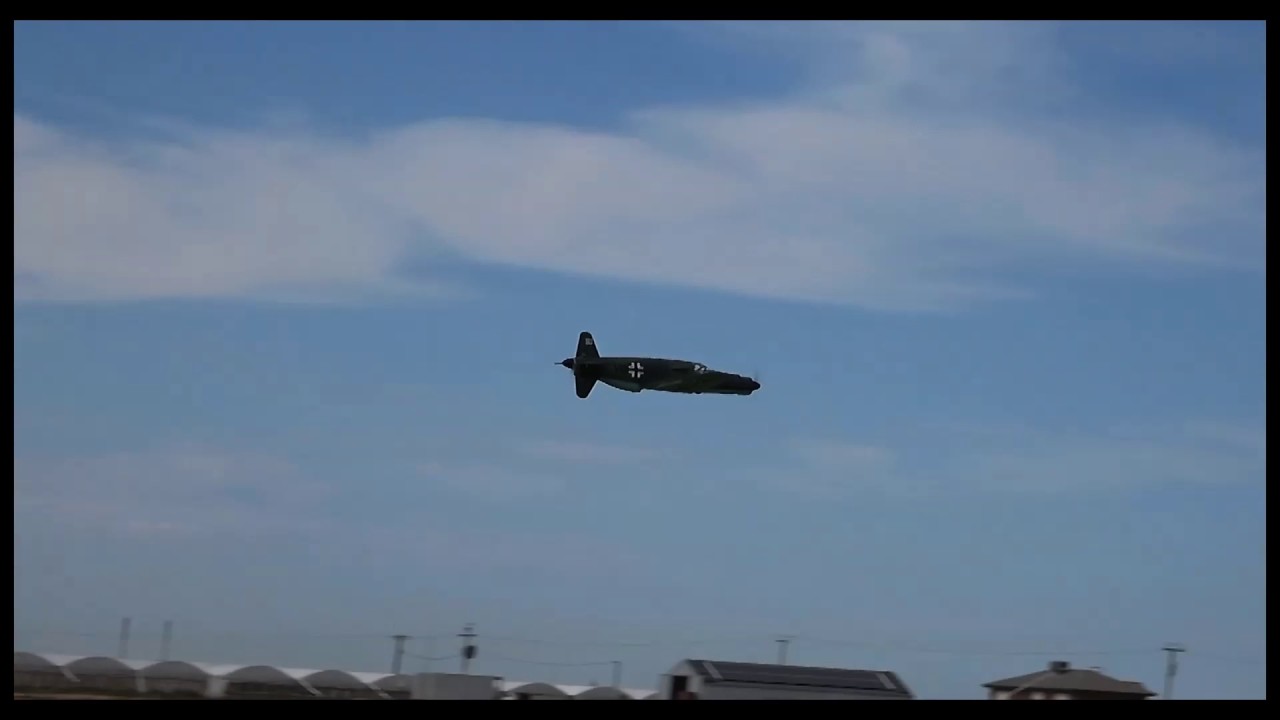
    Here's a Old video of my Do335 before I sold it
    That's running a 14x7 apc on the front and a 14x8.5 apc prop on the rear. takeoff is using half flap Landing's with full flap need to be nice and flat. ...
    Thanks for posting that Terminator -- for whatever reason, that never turned up in my Youtube searches. Great flight (and especially the landing!).

    Leave a comment:


  • MrSmoothie
    replied
    Thanks Oxotnik!

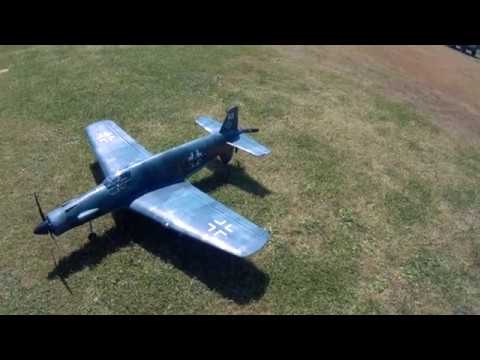
    Finally starting to look like something! Still, a lot of things left to do. But it felt good to get some of the repainting finished. My scheme is Zestorer prototype M14 (RP+UQ), which had oversized markings on the fuselage and wing undersides.

    Click image for larger version

Name:	IMG_1125.JPG
Views:	886
Size:	135.6 KB
ID:	251446Click image for larger version

Name:	IMG_1124.JPG
Views:	823
Size:	185.7 KB
ID:	251447Click image for larger version

Name:	IMG_1066.JPG
Views:	891
Size:	160.5 KB
ID:	251448

    Leave a comment:


  • Twowingtj
    replied
    I wound up doing something simular to what Nick did over on RCG, with the air scoops. The goal was two fold. One was to eliminate the flanges around the parts and two, to get additional air over the battery, ESCs and more to the rear motor.

    I made 1/4 " inserts for the scoops. Cut openings in both the insert and matching in the fuse. Then used the same technique to sand to fit the fuse shape. I went further on the sanding however. I went until the outside flanges came free.

    I also opened up the ventral scoop. To prevent debris from entering, I glued a piece of screen between the mount and scoop when installing. That way I can check and clean the screen if needed.

    Click image for larger version

Name:	Do-1.jpg
Views:	834
Size:	70.0 KB
ID:	250766Click image for larger version

Name:	Do-3.jpg
Views:	824
Size:	128.8 KB
ID:	250767Click image for larger version

Name:	Do-2.jpg
Views:	846
Size:	176.2 KB
ID:	250768

    Leave a comment:


  • Oxotnik
    replied
    Nick's Build-a-Pfeil Blog on RCG hasn't been mentioned lately, but I encourage everyone to stop by Nick's blog periodically to see some of the fantastic 3D-printing work and detailing that he's been doing to his 335. It's fantastic work!!
    https://www.rcgroups.com/forums/show...k-Horse-Models

    Leave a comment:


  • Terminater007
    replied
    Here's a Old video of my Do335 before I sold it
    That's running a 14x7 apc on the front and a 14x8.5 apc prop on the rear. takeoff is using half flap Landing's with full flap need to be nice and flat. ...

    ,,,

    Leave a comment:


  • Oxotnik
    replied
    Originally posted by OV10
    Oxotnik Somehow I missed the high speed pass on the vid, maybe because ya didn't announce "and here's a rip snortin high speed pass for Warbird"
    Next flight, my friend. :-)

    I’d edited out the passes leading up to full throttle, as the passes were mostly out of view. A pass or two before the crappy landing, I announced that I had her at full throttle. Top speed, as recorded by the onboard GPS was 87mph. With a 13 mph tailwind, she’ll break a buck. :-)

    Bent pin has been unbent. I’m mulching the wife’s flowerbeds now (before the storms move in). Should have the Rip Snortin’ Pfeil ready to rip snort again before bed.

    Leave a comment:


  • Twowingtj
    replied
    Oxotnik I used 5mm washers to close the gap on the struts as well. When I got around to doing the nose gear, I found that a 5mm ID wheel collar worked great.

    Leave a comment:


  • OV10
    replied
    Oxotnik Somehow I missed the high speed pass on the vid, maybe because ya didn't announce "and here's a rip snortin high speed pass for Warbird"

    Leave a comment:


  • Oxotnik
    replied
    I'd posted this on Nick's Build-a-Pfeil Thread on RCG, but thought it was also worthy to post here. The post is discussing the repair to the strut pin that I bent yesterday when I dorked up the landing.
    Another observation when I disassembled my struts: no locking fluid was used to attach the struts to the strut pin and there were no flats on the strut pin. The pin that fits into the strut is grooved; so, that'll certainly help to prevent rotation of the strut grub screws on the pin. I have put Vibra-tite VC-3 on all five grub screw that contact the pin. Before putting the struts into the RM400-90 retract initially, I'd ground flats on the pin where the two trunion grub screws contact the pin, and I'd vibra-tited those two grub screws.

    If you've never used Vibra-tite VC-3 for locking threads, it's amazing stuff. It doesn't lock as hard as Loc-tite, and it's removable and reuseable, but it definitely keeps screws from backing out. Vibra-tite can be found on Amazon and eBay. I highly recommend the stuff. I never use Loc-tite any more.

    When I re-install the struts into the trunion, I'm going to make sure that strut is flush with the trunion. It'll give a little more anti-bending support for the strut pins. As it was, there had been about a 1/4" gap between the strut and the trunion. On Nick's RCG Thread, he'd mentioned that he used washers to fill the gap, which is also a good idea, and maybe even better than mine.

    Leave a comment:


  • MANFRED
    replied
    Originally posted by MrSmoothie

    Thanks! Right now, I consider the spinners a work in progress -- every time I print a part, I've changed it a little. Also, the base plate is designed specifically to engage the Flightline F4U Corsair 10mm prop hub -- not just the shaft, but also to engage a hex shape and a larger cylindrical base. I'm using that shaft on a Flightline 1600mm motor, same as Oxotnik. In other words, I think it's a little too "specific" to the parts I'm using. Then there's the big thing -- I haven't spun one yet! I have a test setup and I intend to mount one of the motors, intended prop, and after that, add the spinner, and see how it goes.

    Unless you buy one of those FW-190 spinners (I think there are more than one out there that might work, but don't know), the front spinner is nearly as distinctive in profile as the rear spinner. I recall that on the RCG thread for the Starmax/Hobbyking 1600mm FW-190, there are links to a company that makes a nice ARF FW-190, similar size, that offered 2- or 3- bladed spinners. Oxo, do you know what company I'm talking about?
    Good day Mr. Smoothie, have you had a chance to run your spinner designs yet?

    Leave a comment:


  • Oxotnik
    replied
    Rip Snortin' Flight...


    The video quality is quite...not quality... sorry. I'd grabbed a 120° FOV camera and it makes everything look a million miles away. Plus, I had the camera angled too low on my cap, and a lot of the flying was out of view (and I edited almost all of that out). With the 4-40 pushrods installed for the split rudder and split elevator, the Do-335 was rock-solid at full throttle. I'm a bit embarrassed by the landing. I didn't manage the descent as well as I should have and set her down pretty hard. Hard enough to bend the pin that attaches one of the struts to the retract trunion to where the wheel was binding in the wheel well. I didn't want to risk having a jammed gear in flight; so, just the one flight today. I was very happy with her performance at full throttle though. I flew a bit over 5 minutes (close to 6 minutes) and landed with 50% battery remaining. I'd estimate that over half the flight was at 1/2 to 3/4 throttle. I did roll her (with aileron rates still on low) and it was a sloooooooow roll. LOL Unfortunately, that roll was out view of the dorkcam. :-/

    Anyway, that's my Pfeiling for today.

    Leave a comment:


  • OV10
    replied
    Originally posted by Oxotnik
    . I'm planning to fly her tomorrow, and am looking forward to opening her up for some high-speed flying.
    Lookin forward to the vid of a couple rip snortin LHSP's

    Leave a comment:


  • Oxotnik
    replied
    RE: 150 W/lb. I agree that that's a nice place to be for this Do-335. For the wattmeter/tachometer tests, I had her sitting on a prep stand at the field. These stands are heavy wooden stands with wheels on front, to allow them to be moved around the field. With both motors running at WOT, the 335 makes the stands roll. I had to put bricks in front of the wheels to keep the stand from taxiiing during the dual motor tests. :-)

    During the maiden flight, she felt great. I flew almost the entire mission at 1/2 to 5/8 throttle, and she felt fantastic. I'm planning to fly her tomorrow, and am looking forward to opening her up for some high-speed flying.

    Leave a comment:


  • OV10
    replied
    Oxotnik Oooohhhhhhhhhh, I luv tech data, thanx Chuck
    I got to use some of my early years engineering skills in reviewing your PPP ( Pfeil Power Paper)
    So it was hard to pour through the data and remain un-biased as I read your analysis at the same time of digesting the data but I think I was able to let the science prevail.
    The long n short of it is I totally concur with you analysis that the WOT fishtailing was indicative of the control surface rod flexing than to an imbalance in thrust factors.
    The only observation that I would make concerning your test set up is regarding the watt meters.
    The slight variations between the tractor/pusher motors I would suggest are because you are using industry hobby meters that are:
    1) of average standards and 2) not been calibrated to each other.
    Lab power measurements that I did back in the day were with very expensive meters that got periodically calibrated.
    Because of this I didn't even bat an eyebrow about the "dual 4" measurement and thought of it as just being a meter anomaly.
    And lastly, I expected what you saw in the final paragraph because you are using a single power source versus a dedicated battery to each motor.
    With separate dedicated power sources the additive sum of each motors power reading is going to be higher because the voltage slump as you mentioned
    earlier is due to the motors running in tandem because of the single power source versus running in two singular modes with dedicated power supplies.
    But as we both know all too well, separated power sources on twins is asking for trouble :astonished:
    Great stuff and at 150W/lb that Arrow is definitely in the fighter class. :clap:

    Leave a comment:


  • Oxotnik
    replied
    Okay, sports fans, I have some more motor test data. I went to the field today with my 335, radio, a few 6S batteries, a couple wattmeters, and a tachometer. I ran five tests, each test lasting about 10 seconds. Single means that each motor was run alone. So, for Test Single1, the tractor or pusher motor was run individually, using the same battery, at close to the same starting voltage. Dual means that both motors were run concurrently, using the same battery, but separate wattmeters. For the Dual Tests, I could only tach one prop at a time; so, the Pusher Motor Dual Tach Reading was taken during a follow-on test (so the initial voltage, current, and power would've been a bit lower).


    Wattmeter and Tachometer Tests

    I'd wanted to run this test because I'd observed severe fish-tailing during the maiden flight, when I'd throttle up to WOT for a high-speed pass. I was wondering if, maybe, the flow fields from the tandem motors/props running at high speed were interacting with each other, possibly causing one of the motors to over spin. There was quite a bit of variability in the power and tach data. My take-away from this data is that each motor seems to drop about 100 watts when run in the tandem system, as opposed to running alone, and the prop speed seemed to drop about 100 rpm when running in the tandem system. This makes sense, since two motors are now pulling juice from that same battery at the same time; therefore, there'll be more voltage slump, which will lower the power and rpm. Test Dual4 seemed to be an abnormal test, as the current and power of the Tractor Motor seemed abnormally high. I ran Test Dual5 as a replacement test, and the data seemed more believable. Conclusion: I don't believe that there's significant interactions in the flow fields that caused my 335 to fish-tail at high throttle during the maiden.

    Following my maiden flight, I did observe that by moving the rudder and elevator with my hand, the respective pushrod would bow. So, I replaced the stock pushrods with 4-40 pushrods. When I ran the Dual Tests, I did observe that rudders (both dorsal and ventral) angling a few degrees to the left. I believe that this is a P Factor effect, since the pusher prop is only an inch or two behind the rudders. The elevator did not move though. In flight, this may cause a slight left yaw at high throttle. I suspect that with the stock 2mm pushrods that both the split rudder and split elevator deflected significantly at high throttle, and that caused the observed fishtailing in flight. I'm okay with going back into flight, and high-throttle flight, too, with the stronger push rods. I'd encourage you all to check your rudder and elevator pushrods very carefully for stiffness, especially if you're planning to run as powerful a 6S motor system as I'm running.

    Another observation from this test data is that the power trains are not putting out as much power as I'd originally posted that they would. I'd run two tests, a month or so ago, and observed 1345W/motor, for 2690W total. This test data indicates that the total power is more along the lines of 2400W. For my 16.5 lb Do-335, that'll give me a powers/weight ratio of 145.5 W/lb. Still very respectable for scale warbird. :-)

    Leave a comment:


  • downwind3zero
    replied
    Originally posted by Oxotnik
    I contacted Wendy at TruTurn today. She said that my aft spinner has been cut (she thinks) and is waiting to be shipped. They just have to be allowed to get back into the building to do the packing and shipping. I'd try printing one, but my 3D printer is down (plugged hot head); so, I can't even print one to get me by. I'm thinking about doing a bare prop for the aft. I just cringe, though, at the thought of flying it with a horribly wrong spinner. I'm such a dork... :-/
    Happy to print you one and send it if you like. You would need to use the original back plate modified as I did. Let me know.

    Leave a comment:


  • Oxotnik
    replied
    Originally posted by Twowingtj
    Oxotnik All things considered, I don't think your 335 is too heavy at all. As little as 10 years ago trying to put together a twin engine heavy metal warbird this size under 20lbs would have been near impossible. Especially powered with motors that can turn two near scale 16" 3-blade props.

    Being able to get a nice Do-335 as light and structurally strong as this one, not to mention covered and cosmetically detailed, is outstanding. Especially at this price point. Having the efficient power system available at an affordable price that has the grunt to move this bird with thrust to spare is great. These are good times indeed my friend, good times indeed.

    Thanks for being the "proving grounds" for testing to see if the Pfiel will handle an 8k lipo. I was planning on going large lipos for the 12S BH Glimore, but didn't want batteries that only worked in one plane. Now both the Gilmore and Do-335 can share the 8k 6S packs.

    Most of us that fly the "heavy metal" warbirds don't fly them like an Extra 300 anyway, or shouldn't.
    I agree with you, TJ. I don't think she's heavy at all. When I was flying her, she felt nimble and quick, without being quirkly. Of course, I was flying low rates for the maiden. But, she was locked in, and rock steady, except the second or two that open up her throttles and her tail got squirrelly. I'm really pleased with her. I'm glad that I found a work-around for the aft spinning (painted a Flightline Corsair spinner black). I think that I was the only guy at the field that knew that the aft spinner was wrong. If any of the guys noticed that it looked odd, they probably didn't say anything because they probably thought that with me being the warbird nut that I am, I'd never a fly a warbird that was outfitted incorrectly. :-)

    Leave a comment:


  • Twowingtj
    replied
    Oxotnik All things considered, I don't think your 335 is too heavy at all. As little as 10 years ago trying to put together a twin engine heavy metal warbird this size under 20lbs would have been near impossible. Especially powered with motors that can turn two near scale 16" 3-blade props.

    Being able to get a nice Do-335 as light and structurally strong as this one, not to mention covered and cosmetically detailed, is outstanding. Especially at this price point. Having the efficient power system available at an affordable price that has the grunt to move this bird with thrust to spare is great. These are good times indeed my friend, good times indeed.

    Thanks for being the "proving grounds" for testing to see if the Pfiel will handle an 8k lipo. I was planning on going large lipos for the 12S BH Glimore, but didn't want batteries that only worked in one plane. Now both the Gilmore and Do-335 can share the 8k 6S packs.

    Most of us that fly the "heavy metal" warbirds don't fly them like an Extra 300 anyway, or shouldn't.

    Leave a comment:


  • Oxotnik
    replied
    Originally posted by Twowingtj
    Oxotnik Thanks for the AUW Chuck. Interesting.... even if you went with the Motion recommended batteries, it would still be in the 14lbs+ range. The stock spinners are quite light vs. the Tru-turns. Plus the 3-blade vs. 2-blade props, and the pilot you added is likely more weight than the stock one. It adds up quick.

    Looks like it flew well enough at that weight.
    TJ, the warbirds pilot is very light. Negligibly heavier, if any, than the stock plastic cartoon pilot. With the 5055/6S power train, she doesn't feel heavy. Over on RCG, Nick had asked me about a comparison between the Phoenix Model A-26 and the Black Horse Do-335, as they both had the same wing area. My A-26 (which was packing a pair of Aerodrive SK3 5055-430 motors and MAS 15x9x3 counterrotating props) had plenty of power, but she felt heavy in the air. My A-26 weighed 17.5 lbs, had a wing loading of 41.8 oz/ft^2, and a power/weight ratio of 127.5 Watts/lb. I've only rolled her once and I was thankful that I had plenty of altitude to trade for that maneuver. Although I flew my Do-335 very sedately during its maiden flight, I could tell that she is nimble. She feels light and quick, but not so light that the wind will blow her around, as her wing loading is still pretty high. Knowing that her AUW is 2 lbs heavier than I'd expected doesnt' bother me. With the 5055, 16x10x3 power train, her weight isn't noticeable, other than when you chop power, she comes down quickly.

    Leave a comment:


  • Twowingtj
    replied
    Oxotnik Thanks for the AUW Chuck. Interesting.... even if you went with the Motion recommended batteries, it would still be in the 14lbs+ range. The stock spinners are quite light vs. the Tru-turns. Plus the 3-blade vs. 2-blade props, and the pilot you added is likely more weight than the stock one. It adds up quick.

    Looks like it flew well enough at that weight.

    Leave a comment:

Working...