-
I have glo and electric, equal amounts but I prefer glow having started with it some 35 years ago. However I plan on moving to gas with the smaller displacements becoming more common along with the 20 to 30 cc motors. It's the tinkering part that I like which is why I prefer to build what I fly as well. Electric is a natural offshoot of the ARF movement, easy to get going and into the air. What's great is there are so many ways one can enter now which is great for the overall growth of the hobby... -
All depends on how you look at it and who you ask.
Foamies are definitely easier to repair and instead of fooling around with carburetors, I'm flying. No mess to clean up so no Windex. The neighbors don't complain about the noise. Some planes are reportedly getting up 8 plus minutes of flying. One day we'll wake up to the new generation of batteries and we'll be flying 15 minutes plus. Then we'll see what happens. Especially now that there are 80" planes out there (P40) and EDFs and electrics that top 200 mph. Once we have the battery time issue beaten, I think foamies may take over...
Just sayin'
Grossman
Besides the longer I fly the stupider I get, was the quote from a well know pilot at Nefi. LOL!Leave a comment:
-
Well, I guess that the electric planes like this one
are good for pilotage training and taking experience in modeling. After that you can try the gas engines.
This is the individual choise. Electrics are much more ecological, don't have dirt from burned gas and oil. But the elecrics have less batt resource.
Isn't that?Leave a comment:
-
Great post benjack71. I had exactly the same problem with trying to get back online with my original screen name pgiroma. Your analysis is well thought out and clearly explained. I've gone through the whole progression from nitro- gas- electric myself, and have jumped in with both feet on electric. Last week I took advantage of HH's 10% rebate, and now have the 6s T28 sitting in the shop for $468. Already had the batteries from my Super Scorpion, and ME262. I am very impressed with the T28's quality, and ease of assembly. Hope it flies as well as the video.Leave a comment:
-
Thanks for the input Ben, as someone who hasn't owned a gas/nitro motor since the 60's (cox .049)I admit total ignorance on the subject.
I can say that I hear you on flight times, I do envy the guys with the gassers that get such a long flight time compared to mine and I guess when you think about it, you're either going to pay for fuel or batteries, one way or the other, you're going to pay.
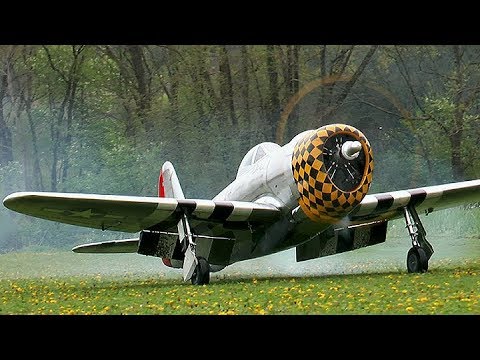
The one thing I couldn't help but notice is the sound from the P47 in the video. My 1400mm Pitts with a minimal sound system, would have that deep belly roar simply because of the cavernous fuselage compartment. Every time I close the hatch on it in the basement there's this great echo like you're in a cave, so if its sound one is after, that's something to keep in mind, although its leaning toward becoming a speaker box, with a sound system in mind, that is exactly what it becomes.
Oh for the day when they announce a new technology that will increase our flight times by double in electrics, then maybe.........
Grossman56
Leave a comment:
-
I love this thread. Let me say for starters I use to post on here under the user name Ben. For some reason I can not remember my password, and the password reset is not working out for me. Just wanted to throw that out since its been awhile since I posted very much. I fly nitro 2 and 4 stroke. I fly electric 1700mm 6s and 1400mm 4s. I have had 1 30cc gas DLE, ESM Skyraider that I am fixing do to the fact I found out I was to stupid to own that plane at the time. This is my take on electric verse petro.
Electric grab and go, smaller planes, only option for foam planes, cheaper fuel costs especially compared to nitro. Of course most foam electrics have a horrifying build time of 2 hours..maybe? . Able to get a better scale look from the smaller planes (1400mm,1700mm, etc.)especially with the new sound systems. Use larger props and multi blade props in a scale fashion on the smaller planes. Less maintenance. Less vibration without sound system.
The bad about electric is reduced flight time. Foamies and hangar rash. How many threads on here about how to put a protective coat on a foam plane? Recharging batteries time. Limited in size for the most part. Ok, I get it you can put electric systems in about anything now, but does anyone really want to have a 50cc Corsair with a 12s system, another battery set for control, another battery for retracts, plus reduced flight time? Ok, lets talk about reduced flight time. If you fly just at your club or by your self and its never that busy in the air no big deal. If you are like me and you go to a lot of fly-ins when flying electric you really limit your self. Because you might not be able to just land when your beeper goes off. For the most part when you have lets say a 5 plane limit in the air, as one lands another goes up if its a decent sized fly-in. So it can be time consuming to try to get your plane on the ground. The beeping of your timer does not mean emergency to most people. I have often pulled my costly 6s batteries down to 30% and below at fly-ins. You learn throttle management in a hurry. Which is fine, but it just means you cant really rip it up. Now, sometimes they will say ok electric only from 10 to 1030 or something like that depending on the fly-in. I have never seen that at a fun fly, but I did see that once at a warbird only fly-in.In short it wont be the death of nitro or noise that causes everything to go electric. It will be improvement in size, weight and mah of batteries imo.
Nitro 2 stroke. Tuning,breaking in.Cost of engine is higher. Cost of fuel is high. Messy. Noisy. Reduced prop size and most likely no good multi-blade scale option at all. BUT. Maybe less torque but power is better. It is usually faster. Overall performance better (compared to electric motor equivalent). Smoke. Sound. That smell of glow fuel! Can set up to power larger air craft cheaper. Yes,nitro 1.20 in a 90 size (70-78 in. wing span usually) would be cheaper than the batteries you would need for your 12s or 8s configuration. Longer flight times than battery. Less weight normally. In short a traditional 60 size and lower is great for electric above that and you start looking at costs. Even the Horizon Hobby 6S T-28 foam electric that is size wise equivalent to a 30cc when you start doing the math, your basically paying for the lack of building involved in the foam plane. You can almost build a 30cc balsa arf, with a gas motor and the radio equipment for what the large scale foam t-28 from HH costs. Not quite but pretty damn close. Then you have to buy batteries for that T-28.
Nitro 4 stroke. Larger prop. Still not going to swing that scale prop in a 60 size or lower. The 90 size and up though probably will. The sound of a 4 stroke. Pretty damn good fuel economy. On my you tube I have a video that demonstrates almost 30 minutes of flying time on a Great Planes Eagle 580 powered with a FS 95V OS engine. There was still about a quarter tank when I landed.That is after break in. Comparable torque. Of course with the 2 or 4 stroke nitro you will need a starter with battery and glow starter. On board glow driver possibly especially with 4 stroke (never used one, even on inverted mounts). Love the smell of that nitro. Love the sound of that engine when you crack that throttle!
Gas. What can I say. With the gas engines getting smaller all the time it is without a doubt the largest barrier opposed to electric systems. It can swing the scale prop even in the smaller sizes. Great power. Great thrust. Cheap operating costs. Not that expensive of a engine, pending on your brand of choosing. Can get a little complicated with the ignition battery plus the receiver pack. Anyone operating a gas engine without a opto kill just does not know any better. So it will require an extra channel for that. Other than that gas is just tough to beat. Setting up the ignition system is the toughest part about it, and that is not that difficult. Although, even though there is people who say you can and yes ignition kits that are set up to do this, I would never ever use one battery on a gas set up for ignition and Receiver/control voltage. I just would not do it period.
In short, electric is going to grow by virtue of the expanding foam market. Better battery tech before it takes over from everything.
I think the death of nitro is way premature, especially with the larger names getting some competition from quality engines such as ASP at much lower prices.
youtube channel
https://www.youtube.com/user/BenMeridethLeave a comment:
-
I have never had a nitro Aircraft but I do have a Nitro powered RC car, an HPI NRS4.
If I were to ever own a non-electric airplane it would be one those that use a gas 4 stroke 5 cylinder radial engine like the one in the video. They just have the most realistic scale sound and power.
Nitro pros and cons.
Pros
Sounds good
Long run times and quick refuels
Cons
Engine break in necessary when new
Engine tuning
Engine will flood once in a while and will require some additional attention to get it running.
Messy oil residue that attracts dirt.
Clean up after each run
Engine has to be treated with after run lubricant after each use or if it will be in storage it will have to be oiled every so often.Leave a comment:
-
I have a fleet of 24 R/C aircraft with only one being powered by a gas engine (OS 40 4 stroke)....my Hangar 9 1/4 scale Super Cub. I really can't imagine her being powered by anything else!

Leave a comment:
-
I still consider myself a relative newb in the hobby, flying since 2011. I have only owned and flown electric and the vast majority of flyers at my club are flying electric.
I have visited other clubs and admired the multi cylinder motors, mostly on the very large models, and briefly thought I'd like to give that a try. Then I watch them tune, tinker with and tweek those motors and realize, I can fly several batteries just in the time they use "getting ready" to fly once.
I think if only for convenience sake I'll stay with electric. And, as others have pointed out, the technology of electric flight is only getting better. As battery, motor, electronic technology and manufacturing improves, it is easy to imagine our planes flying much longer, faster and with more scale features in the very near future.
Leave a comment:
-
I have a lot of very large scale war birds that have gas engines, I don't have any Nitro engines around any more nor-fixed wing aircraft that run on nitro. I do have 6 Helicopters that are Nitro, but they have been in the hanger since 2004. Electric everything up to 40cc then Gas. I even have a 7 foot Black hawk, electric and it's 38lbs. Maybe one day everything will be electric,
JohnLeave a comment:
-
I too used to fly nitro..and there were a few factors that made me change..
#1 foam planes are cheaper
#2 got tired of getting nitro to run right in the temp/humidity changes
#3 the formentioned slime clean up...messy..especially when doing #2, all that exhaust coming out on your hands arms and legs ...and your plane
I do miss the sound, and the current sound systems dont quite match it,but I think with time they will get better,and may even surpass the sound of piston engines.Leave a comment:
-
gave up nitro planes few years ago and got into electric boat racing....had a lot of batteries and chargers etc so when I started flying I went electric and love it...no muss no fuss and no oil to clean up on plane...also sense there are hardly any bulsa kits left to build (and I don't build that great anyway) and I wanted to fly war birds ... where else can I get a plane that looks scale and flys great except for the electric foamies? love em and the price is right....Leave a comment:
-
I've been seeing the cost of the model glow engine drop as they become less and less practical in today's environment.
I'd like to see that diesel! I assume you are talking about thermal efficiency. Now there are some turbo-compound engines (diesel and turbine coupled, not the same as a turbo charged diesel ) that get close to that.
As to the often claimed 90% efficiency for electric motors, those are usually the larger ones. What we play with usually have a peak efficiency in the 80'sLeave a comment:
-
Rocket...Rube Goldberg couldn't have done a better job! Really curious! DocLeave a comment:
-
You know, the gas/glow engines have the advantage that they don't consume a lot of current as the electros.
But they are quete expencive and haven't high efficiency as brushless motors. For example, the diesel engine has efficiency only 40%.
While the brushlesss motor has it upper than 90%.
You can read about the measurements here:
Leave a comment:
-
-
From someone who is just getting started in this hobby I can say electric all the way! I want stick time not tuning time. Not saying that my thoughts won't change but, I think the hobby its self is heading towards electric power.
Leave a comment:
-
I'm with you on wanting to know more about what that contraption is on the P-6E. I'm leaning towards fhhuber's comment on it being smoke set up because of the conspicuously placed fuel tank above the motor. Ok RocketRobin, spill your guts on this please!Leave a comment:
-
I built FAI F3D pylon engines some from my own casting/bar stock. This is a zero nitro engine with full wave tuned pipe. I flew AMA F-1,428 Q500 and 0.15 Quarter Midgets all with Nelson engines. I was involved with the refining of petrochemicals, and built cars engines and chassises for the then Camel GT light class. And later I wrote repairs for flight turbines that produce over 100K lb. of thrust. That's my quick and dirty, basic back ground in liquid powered power plants.
Yes, I fly EF-1 I've even dabbled with a few FAI F5D racers. I have been pushing electrons at high currents since 86 with the Sanyo 1200SCR cell and Astro cobalt motors.
From a competitive power stand point electrics are the only viable power source (with very few exceptions). I have a dozen multi cylinder glow engines both 2 cycle and 4 cycle. I can tell you from first hand experience that the best place for them is on the mantel piece!:@
I think I said it best to the OP's question early on, DON'T DO IT! And this is from a guy that has been at the extreme edge of power generation on both sides of the debate Glow verses Electrics.
Now what I'd like to learn more about are the heat exchangers on that P-6E.Leave a comment:






Leave a comment: