-
Hello! They aren't hard to fly. They actually fly really well. I don't know the plane that you have, but wings can glide forever slowly. These can't, but again not hard to figure them out, both for launching and landing. Watch the video on motionrc of James launching the Dora and do that, you'll have better success.
Read previous pages in this thread to find the issues that come up from flying this plane. They are minor for a plane without landing gear. I like flying this Fw190 and will hopefully always have one. I usually fly it first when I go fly. It has a great speed range.Leave a comment:
-
Hi guys,
greetings from Europe. How are you at this strange COVID time?
I turn to you with help. I would like to switch from EPP, EPO RC trainers to EPO Warbirds.
I am now very often on motionrc.eu and hobbysquawk.com 😉
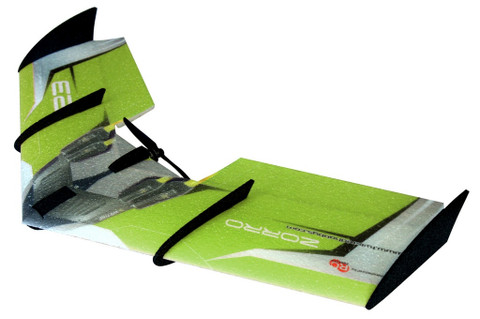
Can I consider the Fw 190 D-9 Dora or P-51D Mustang 850mm from FlightLine after experience with Flying Wing ZORRO?
Thanks for your time.
MartinLeave a comment:
-
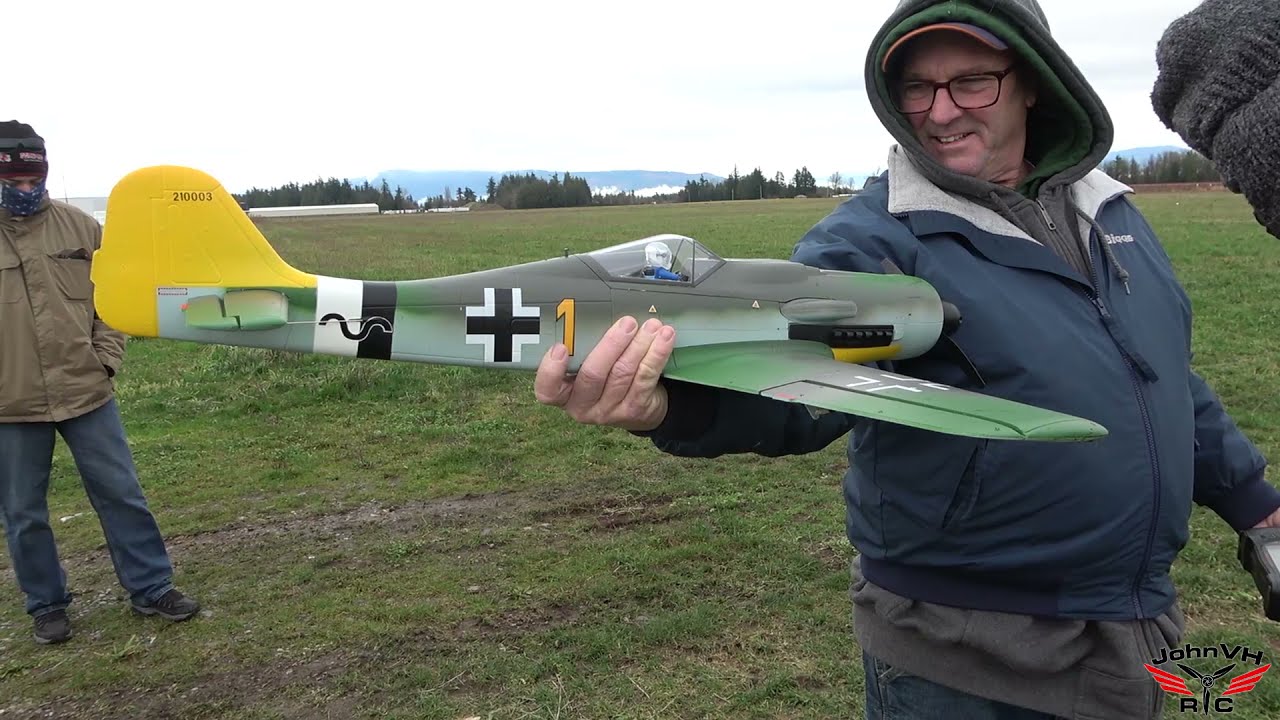
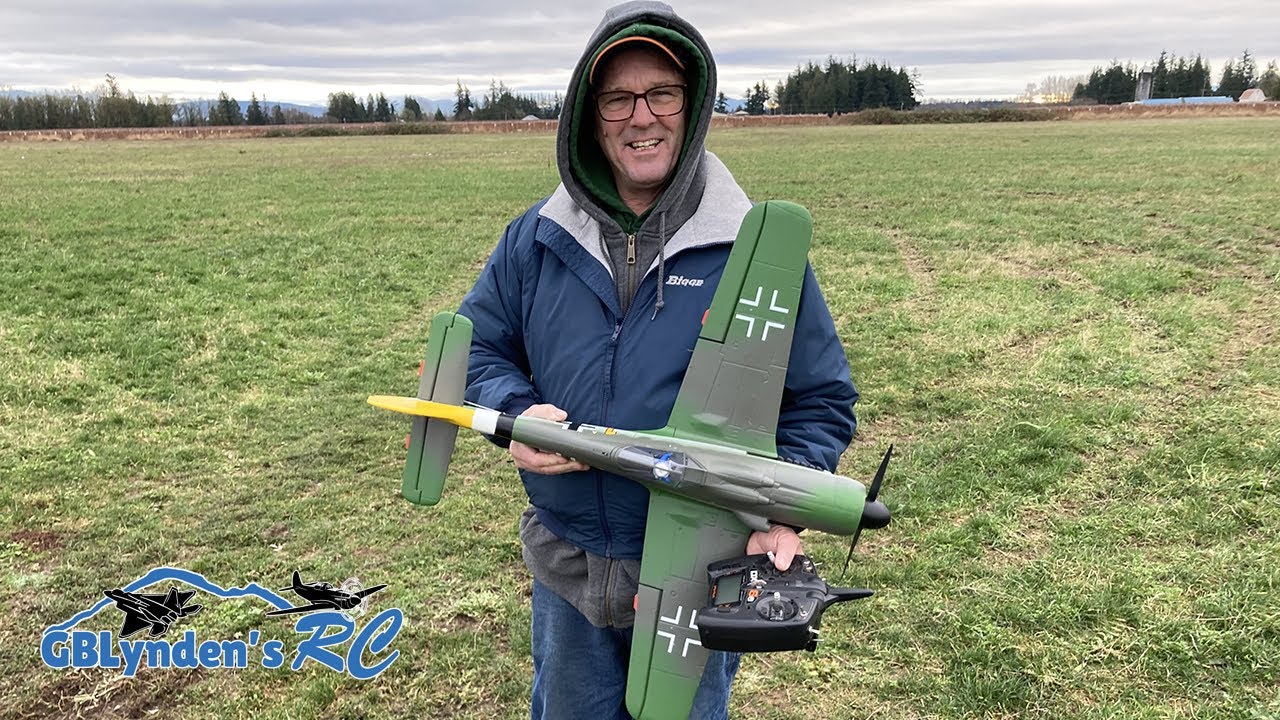
This is Roy's Flightline FW-190 D-9 Dora RC Warbird Maiden Flight Adventure!Leave a comment:
-
-
on my never crashed motors (usually ntm5060's) .050 chuck/slop on the c clamp is normal. it has to be loose to reduce friction
there are several things that could be wrong, starting with most likely:
- bearings are loose either the od of the bearing and the id of the bearing pocket, or the shaft and the id of the bearing have room to move around. I put prick marks in one of the components to take up the slack but that almost never works without the use of Permatex to fix this but application has to be precise. cause its not coming out after that.
- the crank shaft is bent. this can be checked on a drill press. chuck the shaft up, turn on the drill press at a fast rpm then touch the shaft with a felt tip marker. once the drill press stops it should have amarker all the way around it. if the marker breaks do this test again after re-chucking the crank. if the gap is still in the same spot you have a bent crank.
- most unlikely the bearing pocket is damaged
JoeLeave a comment:
-
My feeling is that while you fly more, with all those maneuvers, motor shaft will be able to move back and forth more and more. My two motors have same issue. The first one has experienced multiple nose crashes, which definitely helped to loose it up. The second one has only one crash so far, but already showing problem.
At the beginning I thought it was a feature, such that when there is an accident, the propeller assembly will have some room to move, instead of withstanding the whole force. Now seems I was wrong on this.
Leave a comment:
-
I had something similar happened recently. I crashed my Flightline P51. The crash was bad and decided to buy a new one. While waiting for the new plane, I figured that I could rebuild the one that crashed to see if it will fly again. I was all hopeful, thinking I won't have to replace anything. Then, decided to move the piece of propeller that was left on the motor shaft back and forth towards the fuselage to see if there was any movement. Since, it was a nose dive crash. There was alot of movement. Enough to where the base of the cone for the propeller touched the fuselage. I figured it shouldn't be like that, so I ordered a new motor.
That same movement I had with the old motor was not noticeable with the new motor. But, for some reason It's a struggle to tighten those screws for the nose cone everytime I try to put it in. And, when I was tightening those screws I guess I was pushing too hard(I don't know any other ways to tighten the damn screws without pushing hard), and now the motor shaft is moving on the new motor like the one that crashed.
I haven't flown it yet but hopefully soon.
I have 3 of these Flightline Mustangs. The one that crashed and two new ones that I haven't flown yet. The propeller and nose cone assembly on the new ones doesn't move and touch the fuselage.
I'm thinking that it might fly all right because when I bench test it by throttling up nothing touch the fuselage. It only touch if I hold it with my fingers and push back towards the fuselage.Leave a comment:
-
Motor issue
I amn't sure if I am the only one who have the problem with Flightline 850mm FW190 Dora. According to someone in the field I frequent, this issue isn't that rare.
While flying(usually happened at third or fourth flight), the motor sounded weird, as if the propeller and its hub assembly were out of balance. I had to land quickly. Hand rotating the propeller, obviously it was off center and kinda of stuck.
While it first happened, I removed the propeller to investigate. It looked like the e-clip on the motor shaft was loose, and the hub/shaft can move back and force. Sometimes the ball bearing on the shaft even moved out its place.
Then I went to replace the motor with one coming from P51D mustang of same 850mm class. That motor is almost brand new. However, the same problem keeps happening. Today on the second flight, it happened and once again I urgently landed.
There is an e-clip on the motor shaft. Motor shaft is supported by a ball bearing. Ball bearing is seated in the motor's outer shell. Obviously if the ball bearing is out of its place, motor will be out of balance.
I haven't done any modification of the motor/hub/shaft/e-clip. It was just the stock setup.
I am suspecting some wild maneuvers may cause the acceleration/deceleration of the fuselage and the its out shell. Those relative movements between fuselage and motor core causes the bearing to be out of its place.
Please let me know your thinking, thanks a lot.Leave a comment:
-
paladin Yes, the brake is turned off. The stock props are brittle. I have flown a number of flights with a stock prop and not broken them. But if the ground is soft and catches one of the blades down in the rotation, it will snap easily. I land on dirt that is often damp enough to be soft. I would definitely buy another Dora or P51 if I wreck mine. For some reason. But I definitely wouldn't buy another 'stock' prop. The key is having the landings down. For certain I was landing it too fast at first.Leave a comment:
-
Btw I have no trouble seeing the plane and have been pushing bat back nose heavy is no good for belly lander comes in too hot for my tastes
1600 to back of tray I think I can go back about a quarter inch off trayLeave a comment:
-
Just flew mine in 20 to 25 mph wind
Guess what flew just fine ...
Broke my fourth prop understandable
Anyhow I'll figure out how to put folding props on these birds and fill you in for sure I'll be getting apc props
Four flights four broken props it's not me
Once this issues resolved planes will be six star
Now I can only give the three
But as far as flightime
1600 gives me six minutes 4 cell
2200 gives me 7 or better I'm betting 9 to 10 at light throttle
No need for rudder except if your into snap rolling or stall turns
Leave a comment:
-
I have confirmed the gyro was off when I flied it. Otherwise, the control surface throws were just wild and it would crash in the first second. I haven't figured out how to set the gain yet, that is the reason to turn it off. It was controlled by a radio switch, so yes the gyro was 100% off. 😁
Leave a comment:
-
Whatever helps you to see it and fly it! Mine always look better in the air than in the ground. Well new out of the box they look pretty good.
Are your gyro settings working un the correct direction? I've seen them reversed and it makes it difficult to fly, still possible but difficult. I don't mean to presume anything but it might be worth checking to see that the gyro isn't reversed. Tou have to check each control surface.Leave a comment:
-
Leave a comment:
-
Here's what I did to my first Dora in attempts to make it easier to see. Its pretty alpine around me, lots of green and dark green. I thought the yellow would help. But I think I'd have to paint the whole thing yellow to really benefit for orientation. It does look cool whizzing by but its a.small plane and fast, so it gets smaller real fast. Congratulations! Once I got the first flights in it became easier to launch because I knew exactly what it takes. Are you running a stabilizer in it? The wing wag my been the gyro turned up just a little too much. I end up at 11 o'clock or even 10 o'clock on the receiver dials. I found anything higher for me would cause the oscillation.
Leave a comment:
-
-
SanExup, I just happily report that today I got my first two successful flights from the Dora.
After our last round of discussion, actually I experienced another crash, which broke another propeller! I blamed the crash to lacking of power, I believed I used a very old 3s battery whose performance was not as good. And also blame to the radio I use, which was a near-new radio. The problem is that the radio doesn't balance well hanging from a neck strap. It tilted a lot. So my right hand, while holding the right stick, but in an awkward position.
Fortunately, I still have an APC propeller which I bought for the P-51 Mustang 850mm, which was totalled in its maiden flight. So I still have that propeller.
Using a rotary tool to cut off here and there, I fit the propeller on. I just found there was a new post above about modifying the cowling. Anyway...
Today I used about 90% throttle, because I think my battery is not that good, some internal resistance there. I used right hand undertoss, while right hand is my main hand. I use a flap setting, which mixed in a little bit of upper elevator. It finally flies!
But there are three issues I found out:
1. the launch is still twitchy. Quite some left-right wobbling! I am happy it survived the two launches.
2. the APC propeller has a protruded back edge, which may eat into the foam when landing. The cowling/propeller assembly is on a spring loaded setup, it may move back when landing. So I cut off a bit of foam.
3. visibility of the model is not so good because its camouflage livery. So I put on a lot of white monocote strips. Hopefully this will fix it.
Leave a comment:








Leave a comment: