Thanks!
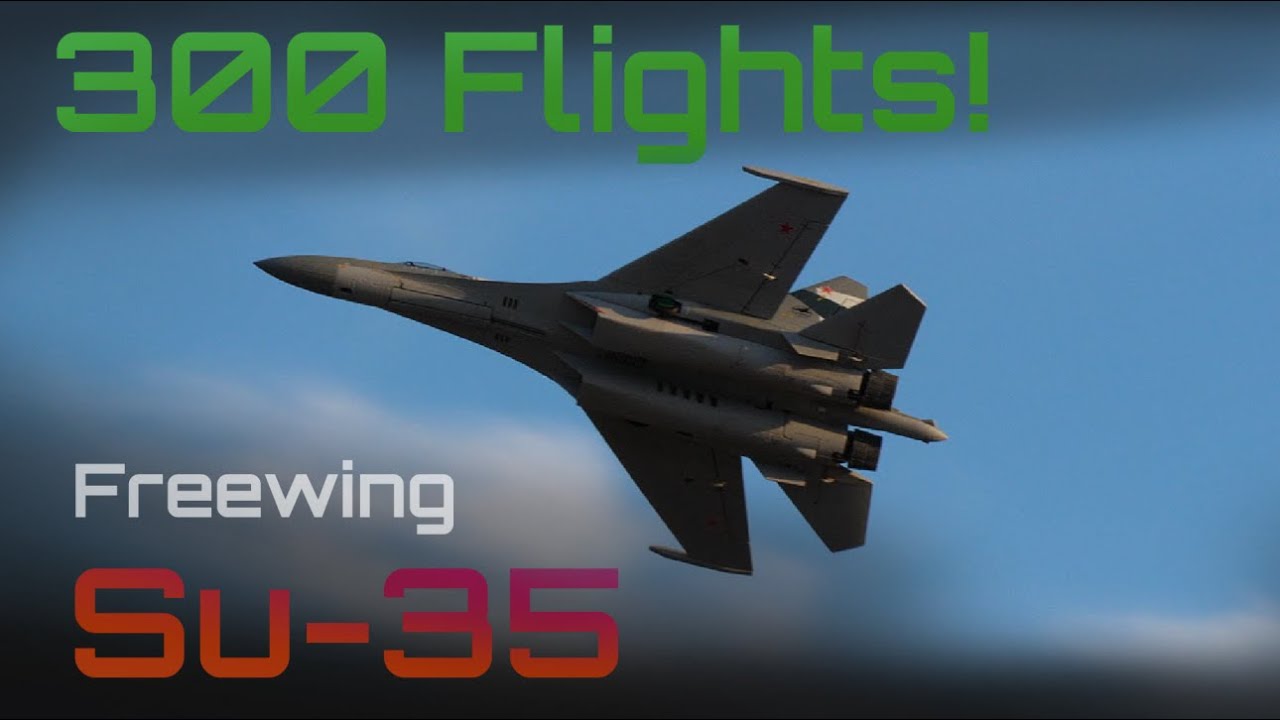
Su-35. It's barely even a contest. (IMO)
That's correct.
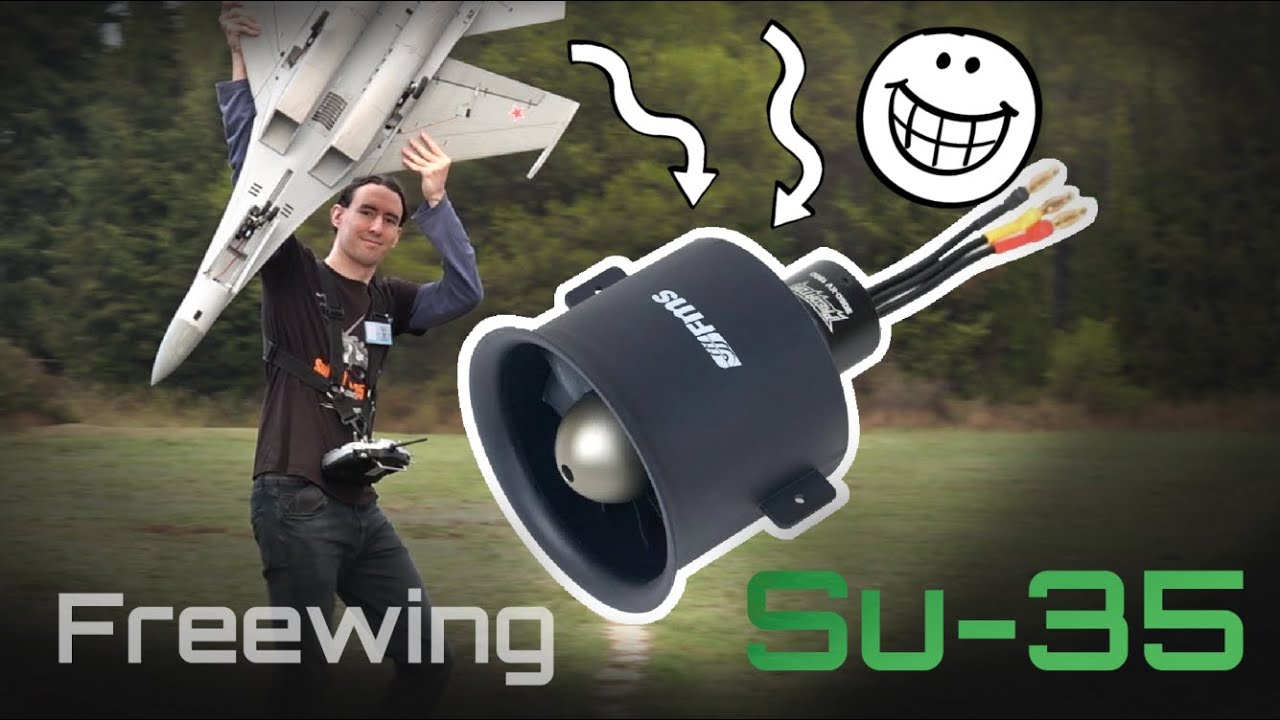
That's incorrect. Sound depends mostly on the fans, and the stock fans are doodoo. Get the ARF and install your own stuff. With FMS Pro 1900kv fans with HW 80A Skywalker ESCs you'll get great performance and sound on the Su.
Crappy material? Certainly not. If you ask me, the old EPS used in the Su-35 is widely superior to all the EPO crap we have nowadays.
Yes, EPO doesn't get dinged and scratched as easily but it's extremely heavy, not really rigid, thicker walls need to me made to compensate for that, the planes that come as a result are underpowered pigs for the most part and it doesn't stick with epoxy, which is my favourite glue for structural repairs. So no, certainly not crappy. EPS is extremely light while still providing awesome mechanical properties. It's sad to see it being abandoned as a material, if you ask me.
Sound mostly depends on your fan, again. And I certainly wouldn't recommend the stock setup either so this point is moot.
Longer flight times? Not by any chance if you intend to improve Gripen performance. The stock bird flies about as long as the usual Su-35 setup. But if you go to more powerful Gripen setups, flight time suffers much more. Su-35 kicks the Gripen's ass in endurance any day. It also is a more efficient design as far as gliding goes. The Gripen is a brick.
Also correct.
But the real Gripen pros are:
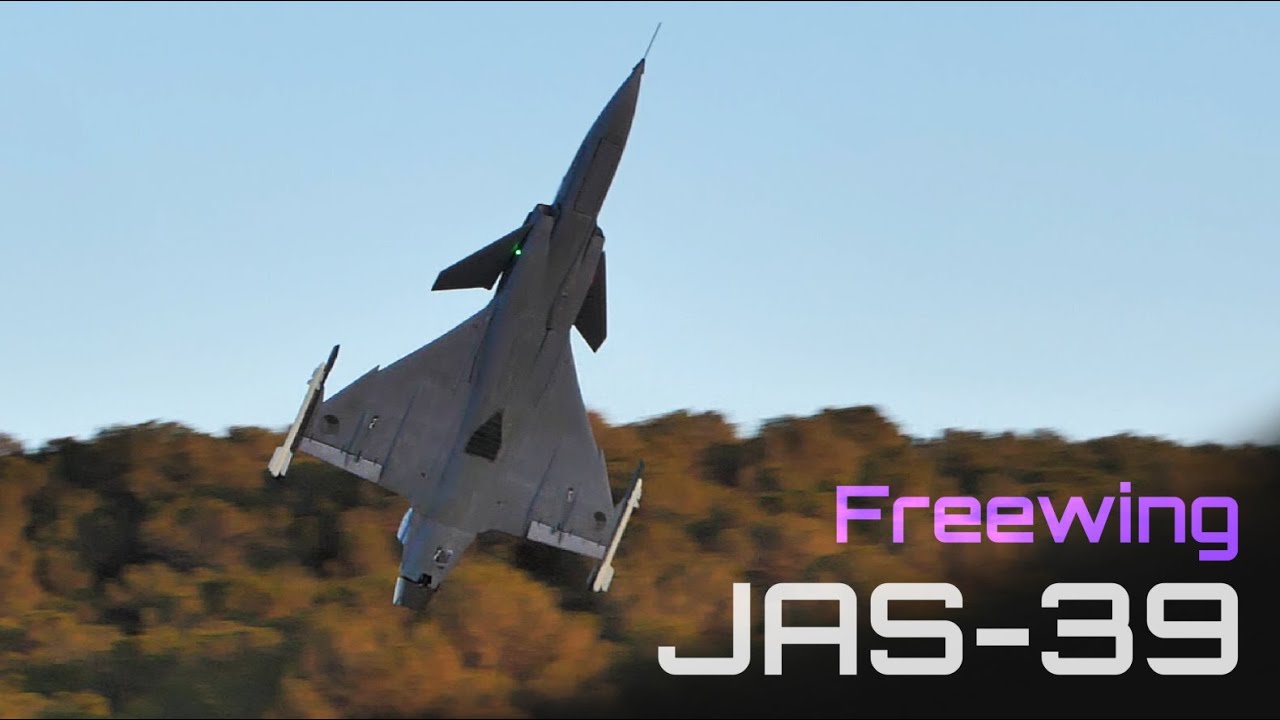
Has the easiest to handle high-alpha features, extremely easy to land, easier to upgrade to 8S, takes quite a beating during crashes (SU-35 gets the intakes crushed, but Gripen has them sideways so it has better survivability), etc.
Both are fantastic aircraft and I recommend them both... but if you need to choose between them, for me, the Su-35 is the superior aircraft in most regards.
As far as Su-35 sounds with the FMS 1900kv... check it out:
Official Freewing JAS 39 Gripen 80mm EDF Jet
Collapse
X
-
Nice flights! (cept the crash :) ). You got a lot of experience with the su 35 and now with this one with TV.
Wich one do you prefer if you had to choose one?
I am torn between those:
Pro Su 35: Cheaper and looks extremely nice.
Con: Sounds horrible, made of light but crappy material
Pro Gripen: Sound better. Probably longer flight time?
Con: Tends to wiggle around a bit. Costs more.
I know they're both very good jets but I don't plan to buy both. My hobby cellar is full with planes as it is. :DLeave a comment:
-
Well, thanks!
6 min is actually pretty short if we consider the length of my average video though, hahaha!
Leave a comment:
-
When I saw 6 mins and heard the music start to play, I was ready to fast forward to the crash. But, those slow motion high alpha kept me glued to the whole video. That was some amazing flying. Great video.Leave a comment:
-
Thanks Guys, and i think i already had that downloaded before i even baught the plane
If you don't have the VT installed you can add tailweight with my "heavy nozzle" which also looks better than the stock nozzle
https://www.thingiverse.com/thing:4650359
....and i will think about more tailweight, but i have to keep in mind that mine will get a new color scheme that will move the CoG back a bit too, so i dont want to change that much before i have a least the basecoat on the the plane...and than i need a few more flights...testing is everything
Leave a comment:
-
If you don't have the VT installed you can add tailweight with my "heavy nozzle" which also looks better than the stock nozzle
I have 2 more lipo packs on order and they are lighter than the HK heavy duty packs, so there will be room to experiment with the CoG a little bit more. I get back to you after they arive, and of course we need better weather too, right now further testing is impossible due to very high wind speeds in our area, autumn storms you know.
The Gripen needs weight in the tail to achieve an acceptable CG position. This nozzle has accommodation for up to 60g of small lead weights, in addition to weighing over 60 grams itself. Print wide-side down, with supports.You will need to peel off the plastic outer of the stock nozzle, and trim back the foam to leave a stub 13mm long to which you glue the new nozzle. I suggest taping the join on the inside to ensure smooth airflow,Leave a comment:
-
Consider adding a bit of tail ballast or shifting EDF and/or nose landing gear aft ;)Leave a comment:
-
I have 2 more lipo packs on order and they are lighter than the HK heavy duty packs, so there will be room to experiment with the CoG a little bit more. I get back to you after they arive, and of course we need better weather too, right now further testing is impossible due to very high wind speeds in our area, autumn storms you know.Leave a comment:
-
That's still extremely nose heavy, and one of the most likely reasons why you are experimenting wing rocking even in good weather conditions. I'd suggest to keep moving it aft.
Leave a comment:
-
i understand, and of course i can not really describe the exact wind conditions or turbulence at our field at about 30m above ground but on the deck it was 0-wind and i still had a very light rocking in the wings (that was before the gyro was installed of course, or with gyro gain at 0%)...and for example, im currently flying with the CoG at 130mm (or 8mm further back than it is stated in the manual (original CoG 122mm))...fyling with a 4000mAh heavy duty pack from HK, no problems takeing off on our grass field, very smooth and good looking take off this way, flighttime between 4-4.5min. with some throttle managment of course.Consider that ultimately it's not so much about 'net wind' but air quality.
Sometimes the windsock may be totally vertical but the air can be full of turbulence, eddies and rotors all the same.
It really depends on your local conditions.
On a really calm day, it should NOT do that wingrocking whatsoever, particularly not if you are not doing any high alpha stuff.
This said... where's your CG?

Leave a comment:
-
Consider that ultimately it's not so much about 'net wind' but air quality.
Sometimes the windsock may be totally vertical but the air can be full of turbulence, eddies and rotors all the same.
It really depends on your local conditions.
On a really calm day, it should NOT do that wingrocking whatsoever, particularly not if you are not doing any high alpha stuff.
This said... where's your CG?
Leave a comment:
-
Hi, did anyone here has or had a smal oscillation on the roll axis of his GRIPEN during flight?
I saw the same behavior in some videos and mine is doin the same thing, specially if she gets slower...i put in an A3L that fixed the problem...flys much nicer now, i was just wondering were the smal oscillation came from - a wrong ratio between elevons and canards maybe?...any ideas would be appreciated
Yes, mine did whenever it was windy. Cured it competely by putting in a HobbyEagle A3S2 gyro.
Leave a comment:
-
yes i heard about that phenomenon "dutch roll" before, but i never really had a plane where it was that apperant, and on my Gripen it even appeared in 0-wind conditions. And dont get me wrong here, it was not very bad but it was there. And usually i also dont fly with a very high AoA at slow speeds (i know some people love to do that all the time, specially with deltas) and i could have understood the rocking at a maneouvre like that, but the only time i get into a slightly higher AoA at really slow speeds is during landing, were the normal AoA should be between 5°- 10° (any higher AoA and you basicly land on the tail pipe of the Gripen anyway), and that did not sound that high to me, but i guess i was wrong. Anyway the gyro (A3L) eliminated the movement completly, thanks for the help and all the new infos guys, i guess i was just worried that i made some kind of setup error or something, but as it turned out i just learned something new here :).All aircraft have some degree of 'wing rocking' (particularly when flying in high alpha conditions, but not just).
Part of it is a phenomenon known in aerospace engineering as 'dutch roll'. Another big part of it has to do with oscillations induced by asymmetric vortex shedding at high AoA akin to that caused by the airflow/drag around a cylinder-cross-section object (Kármán Vortex Street, if you want to do some research on it). An aircraft flying at high angles of attack usually behaves similarly to what you see for the cylinder case.
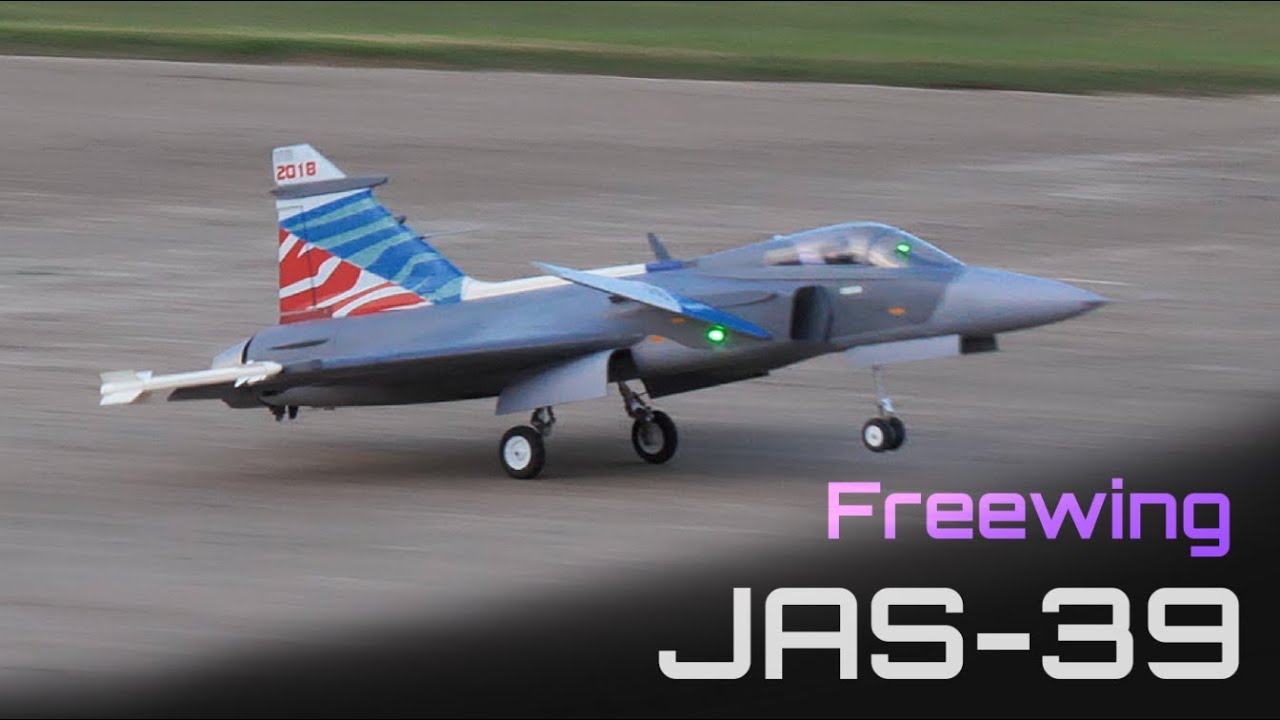
In any case, what has been systematically reported on this Gripen is that it does not deal well with turbulent wind conditions. You will find the jet flies on rails if you have 0 wind.
In linear, laminar wind, the jet will also fly very well, but if wind in your area is dirty, then the jet will fly like crap.
Some factors that affect this and can help to an extent are CG placement and canards' setup.
With a more aft CG setting and canards trimmed slightly pitch-down (about 3-5mm on the leading edge depending on your actual CG), this tendency to rock the wings is not as pronounced. Canards should also be used just for pitch (Although some will disagree to that). Using canards in roll may further worsen that 'waddle'.
Ultimately, adding a good gyro will help a lot and I highly encourage doing so.Leave a comment:
-
All aircraft have some degree of 'wing rocking' (particularly when flying in high alpha conditions, but not just).
Part of it is a phenomenon known in aerospace engineering as 'dutch roll'. Another big part of it has to do with oscillations induced by asymmetric vortex shedding at high AoA akin to that caused by the airflow/drag around a cylinder-cross-section object (Kármán Vortex Street, if you want to do some research on it). An aircraft flying at high angles of attack usually behaves similarly to what you see for the cylinder case.
In any case, what has been systematically reported on this Gripen is that it does not deal well with turbulent wind conditions. You will find the jet flies on rails if you have 0 wind.
In linear, laminar wind, the jet will also fly very well, but if wind in your area is dirty, then the jet will fly like crap.
Some factors that affect this and can help to an extent are CG placement and canards' setup.
With a more aft CG setting and canards trimmed slightly pitch-down (about 3-5mm on the leading edge depending on your actual CG), this tendency to rock the wings is not as pronounced. Canards should also be used just for pitch (Although some will disagree to that). Using canards in roll may further worsen that 'waddle'.
Ultimately, adding a good gyro will help a lot and I highly encourage doing so.Leave a comment:
-
Hm interresting, never had something like that on any of my planes (P-38, Venom or FW189) but those were all smaler models so i might didnt noticed it at the time. And well the only other Gripen at our field is usually moved around at 95-100% throttle (even while taxing) so even if she has similar behavior i would, or could not notice it at that speed.I'm no "armchair" aeronautical engineer, but this oscillation (I sometimes call it a "waddle" or tail wag) might be a characteristic of some deltas and twin boom model planes. There are 3 Gripens at my field. Mine and one other uses no gyro and yet we don't see any oscillation at any time, while the 3rd Gripen had a terrible waddle and the owner was about to sell the plane till he put in a gyro - waddle gone and he now loves the plane. My OV-10 had a tail wag and a gyro fixed it. My 90mm Venom had a tail wag (no gyro) but for some reason, from one season to the next and having done nothing, the wag went away. I have no idea what I did to make that happen. My old FMS P-38 had it, too but I never kept it long enough to try to fix it.
Oh, and my AL-37 had it bad even though it's not a twin boom. A gyro fixed it, along with cutting the lower winglets off.
And on my Gripen it is not such a big thing, some other club pilots who watched me fly my model didnt even noticed the slight movements but i found it a bit odd. And for me it kind of diminished the otherwise smooth looks of the plane in the air...and of course it made the landing a bit unnerving (mostly because the tail wags got a bit more pronounced whan she moved slower), even nothing really happened in the end...anyway now with the gyro and a proper landing phase programmed into my TX she is steady as a rock and flys stable and true...im glad these little electronic helpers existLeave a comment:
-
I'm no "armchair" aeronautical engineer, but this oscillation (I sometimes call it a "waddle" or tail wag) might be a characteristic of some deltas and twin boom model planes. There are 3 Gripens at my field. Mine and one other uses no gyro and yet we don't see any oscillation at any time, while the 3rd Gripen had a terrible waddle and the owner was about to sell the plane till he put in a gyro - waddle gone and he now loves the plane. My OV-10 had a tail wag and a gyro fixed it. My 90mm Venom had a tail wag (no gyro) but for some reason, from one season to the next and having done nothing, the wag went away. I have no idea what I did to make that happen. My old FMS P-38 had it, too but I never kept it long enough to try to fix it.Hi, did anyone here has or had a smal oscillation on the roll axis of his GRIPEN during flight?
I saw the same behavior in some videos and mine is doin the same thing, specially if she gets slower...i put in an A3L that fixed the problem...flys much nicer now, i was just wondering were the smal oscillation came from - a wrong ratio between elevons and canards maybe?...any ideas would be appreciated
Oh, and my AL-37 had it bad even though it's not a twin boom. A gyro fixed it, along with cutting the lower winglets off.Leave a comment:
-
Hi, did anyone here has or had a smal oscillation on the roll axis of his GRIPEN during flight?
I saw the same behavior in some videos and mine is doin the same thing, specially if she gets slower...i put in an A3L that fixed the problem...flys much nicer now, i was just wondering were the smal oscillation came from - a wrong ratio between elevons and canards maybe?...any ideas would be appreciated
Leave a comment:
-


Leave a comment: