

You must Sign-in or Register to post messages in the Hobby Squawk community
Registration is FREE and only takes a few moments

Register now

Announcement

Collapse
No announcement yet.

Official Freewing B-2 Spirit Bomber 86" Twin 70mm EDF Jet

Collapse
X
Collapse
First Prev Next Last
 
  • Filter
  • Time
  • Show
Clear All
new posts

  • xviper
    replied
    Originally posted by GliderGuy View Post
    My drag rudders are 25 mm open top to bottom at the outer rear edges. That is the closest I can get. It is not critical.-GG
    Going back to this post and to Quax's enquiry, it's odd that you could only get yours to open 25mm. I know you mentioned that it's not critical, so that being the case, no need to worry about it at this point.
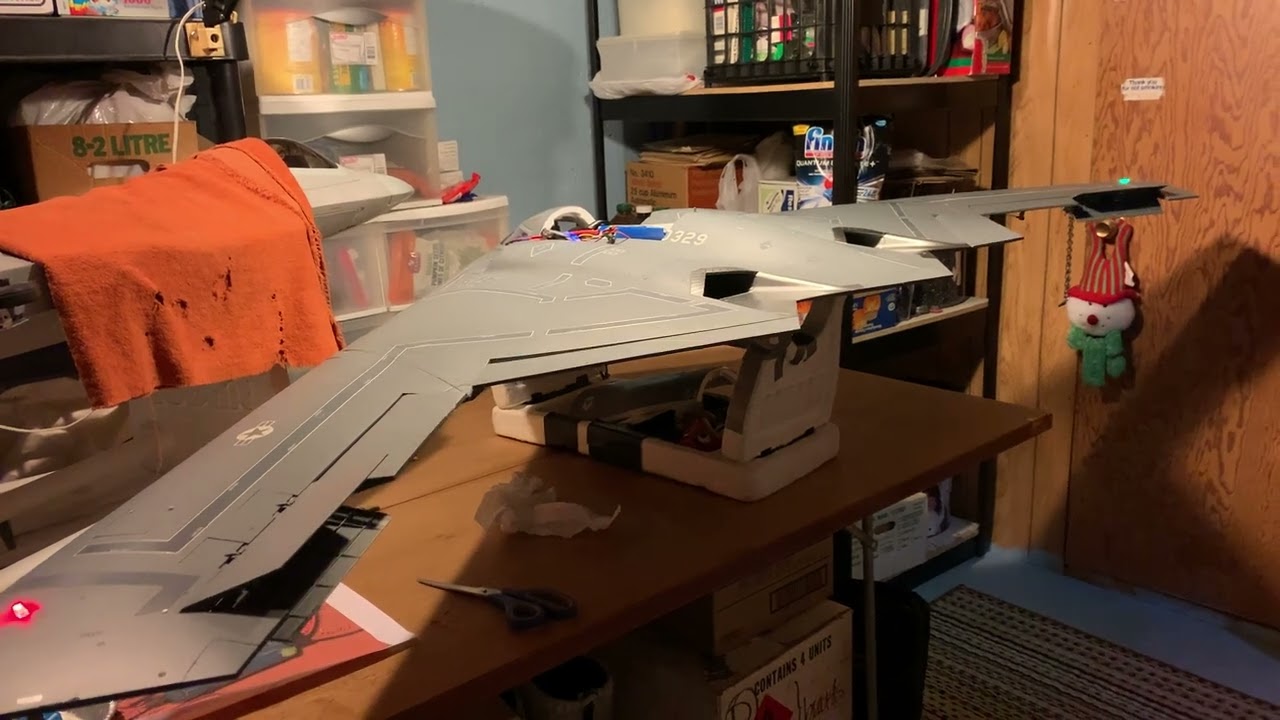
    I'm thinking back to when I was setting mine up and I actually had to reduce the opening. It was, at one point, 55mm opening. If I recall correctly, it was mostly the mechanical adjustments of the 2 connecting rods inside each drag rudder that set the opening. Very little TX electronic adjustments were used, only to use the rudder stick to make sure they were centered when closed. I finally got them down to the recommended 45mm.
    Most of the electronic stuff happened when programming drag brakes:
    Leave a comment:


  • Quax
    replied
    Originally posted by xviper View Post
    I suppose it's possible by using something like "dual rudders" on the gyro but that could open up a whole other can of worms. Nevertheless, the adjusting the drag rudders should not involve the gyro anyway. When the gyro acts on the RUDD channel, it does so on both as both act in unison when rudder is commanded. On this plane, the gyro does compensation for external forces such as wind gusts. It's the "control box" that does a lot of the fancy footwork with regards to drag rudder operation and the various elevon mixing. Adjusting the "open-ness" of the drag rudders can be an intricate affair. I followed the manual as best I could for setting up the drag rudders but most of it was viewing a video that was in this thread early on. I can't seem to find it now but here is another video that covers similar principles.

    https://www.youtube.com/watch?v=Gfb-nzEUHVE
    That video is the one I used for setting up my rudders. However, it is only part of the story as restricting the travel of a servo on one wing will restrict the travel of the servo on the opposite site as they are both controlled via a single channel. That is why I asked how it is possible to control both drag rudder servos independently (which is also a prerequisite to have both drag rudders fully open during landing roll) in the gyro setup of the B-2.

    Thanks for all the great tips you all provide here! I appreciate that very much. Thank you.

    Leave a comment:


  • xviper
    replied
    Originally posted by Quax View Post

    Is it possible to use the build in gyro AND control both servos separately? When I limit the amount of travel in one direction, it automatically limits the amount or travel or the servo on the opposite side.
    I suppose it's possible by using something like "dual rudders" on the gyro but that could open up a whole other can of worms. Nevertheless, the adjusting the drag rudders should not involve the gyro anyway. When the gyro acts on the RUDD channel, it does so on both as both act in unison when rudder is commanded. On this plane, the gyro does compensation for external forces such as wind gusts. It's the "control box" that does a lot of the fancy footwork with regards to drag rudder operation and the various elevon mixing. Adjusting the "open-ness" of the drag rudders can be an intricate affair. I followed the manual as best I could for setting up the drag rudders but most of it was viewing a video that was in this thread early on. I can't seem to find it now but here is another video that covers similar principles.

    Leave a comment:


  • Quax
    replied
    Originally posted by xviper View Post
    Drag rudder opening amount is adjusted and set via multiple routes - look at servo travel, servo subtrim and manually adjusting the rods inside the wing tips. If you're happy with rudder authority, just go with what you've got.
    I've got mine to also act as drag brakes where they both open up as wide as possible for shorter landing roll. This involves some fiddling with mixes, switches and other electronic bits.
    Is it possible to use the build in gyro AND control both servos separately? When I limit the amount of travel in one direction, it automatically limits the amount or travel or the servo on the opposite side.

    Leave a comment:


  • xviper
    replied
    Drag rudder opening amount is adjusted and set via multiple routes - look at servo travel, servo subtrim and manually adjusting the rods inside the wing tips. If you're happy with rudder authority, just go with what you've got.
    I've got mine to also act as drag brakes where they both open up as wide as possible for shorter landing roll. This involves some fiddling with mixes, switches and other electronic bits.

    Leave a comment:


  • GliderGuy
    replied
    Hi Quax - Congratulations!

    My drag rudders are 25 mm open top to bottom at the outer rear edges. That is the closest I can get. It is not critical.

    Energy management and winds 5 mph (8 kph) or less are the keys. She’s a “special day” plane. Why? Gusts will cause a bounced landing = disaster! Early morning and late afternoon when there are no thermals is a good time. Thermals cause gusts.

    Don’t get slow 3 ft (1 m) up, she may drop a wing = disaster

    Get down about 6 inches (15 cm) up and do everything you can do to SLOW her down. Touch down with as little energy as possible. She won’t drop a wing if you are slow and in ground effect. I often touch with full up elevator just like a Piper Cub landing. NO ENERGY = NO BOUNCE

    While in ground effect you need to be at ZERO throttle. MINIMIZE YOUR ENERGY. NO ENERGY = NO BOUNCE

    Mostly I get on final in a full glide (no throttle), but depending on conditions, a touch of power helps avoid a sinking vertical velocity.

    You need to touch with as small a vertical velocity as possible…..make every landing your best EVER!

    Enjoy her longer….follow the advice above.

    But nobody can be perfect every time, so order some spare parts for a nose gear repair. You will need them…especially have a spare retract servo handy. Then go back up a few posts and learn about how to make the repair when the nose gear assembly rips out of the foam.

    It has been many, many months, now, since my last botched landing that required a nose gear repair and hundreds of successful and fun flights. Take the above techniques seriously! They work!

    -GG

    Leave a comment:


  • Quax
    replied
    Hello everyone,

    I had a successful maiden flight with my B-2 this morning. Thanks for all the tips about setups (especially drag rudders although I can't get them open enough for the amount as stated in the manual) and warnings about landing this beauty. She flies just nicely and as from my impression very stable.

    Landing is kind of difficult (at least for me): As it was mentioned it tends to bounce and even a light bounce will increase from bounce to bounce. I decided on a go around each time and saved the plane but it took me five (!) attempts on the last flight (the next one would have been a belly landing as my battery ran out of power). I am not sure yet about the best technique with some speed and just fly it down to the runway and let it settle or low speed and flare in time (as good as I can).

    Best regards and thanks again everyone!

    Leave a comment:


  • GliderGuy
    replied
    Yep FoamTac = great stuff

    Cool but beautiful day in north Texas. Waited for 45F and calmer winds then took the B-2 out for 10 flights.

    Such a fun bird to see driving around the sky. And there’s the ever present “must make good B-2 no-bounce landings” challenge to keep things interesting.

    Got in some P-38 and F-4 flights too

    -GG

    Leave a comment:


  • SanExup
    replied
    Right, thanks for the insight. Yeah, it seems every glue has it's best uses and not always interchangeable. I've found that out the hard way. Foam tac seemed like an odd glue initially when I started assembling foam models, coming from a mostly balsa and CA background. But I think I like it more than any other now, being a full foamy convert.

    Leave a comment:


  • kallend
    replied
    Originally posted by SanExup View Post
    Thanks GliderGuy! I've never heard of Bondic and am highly intrigued and will pick some up. I've been using CA for spot welding but the Bondic sounds worthy.
    I've been using it for a while and it's great for tacking parts in place whlle waiting for stronger adhesives to set up. Especilly good for parts with shapes that make them hard or impossible to clamp. It's also good for making fillets. It allows almost unlimited time to make adjustments before instantly setting up when the UV is applied. It's basically the same as dentists use nowadays for attaching crowns to teeth.

    I find it not strong enough in tension by itself for repairs to highly loaded parts.

    Leave a comment:


  • SanExup
    replied
    I just ordered a kit and spares!

    Leave a comment:


  • GliderGuy
    replied
    Originally posted by SanExup View Post
    Thanks GliderGuy! I've never heard of Bondic and am highly intrigued and will pick some up. I've been using CA for spot welding but the Bondic sounds worthy.
    The big advantages over CA glue are:
    - Near Instantaneous cure…no molecular surface moisture is needed as with CA glue types.UV glue isn’t picky.
    - You can make the glue bead as thick as you want. Building up in several thin layers is suggested.

    Several online stores sell Bondic and other brands, but I have experience only with Bondic brand. You may want to consider ordering additional glue. I find myself using it in a lot of applications.

    Note: Field repairs can be a bit tricky because the UV in sunlight cures it. Best get in a shady spot.

    -GG

    Leave a comment:


  • SanExup
    replied
    Thanks GliderGuy! I've never heard of Bondic and am highly intrigued and will pick some up. I've been using CA for spot welding but the Bondic sounds worthy.

    Leave a comment:


  • GliderGuy
    replied
    Adding to Xviper’s excellent advice above…..

    Since the torn foam may expand a bit from fractures, it may take quite a bit of compression pressure to seat the glued assembly in place and ensure proper alignment for retraction. The AL37 mains are a prime example of critical alignment. FoamTac will creep during cure and allow misalignments, if you release the compression pressure before the glue sets hard. And getting a clamp on the assembly may be problematic.

    So…What’s a solution?

    While holding pressure on the assembly and proper alignment, secure it with a UV cure glue like Bondic. Strategically “weld” the assembly as you apply the pressure/compression with sufficient UV curing glue which sets instantly and maintains the correct assembly position permanently while the primary repair glue like FoamTac cures.

    Note: UV glue is too brittle to work for a landing gear assembly repair all by itself, but it is perfectly suited to hold parts in place while the primary glue cures.

    Spot welding with UV glue to hold parts in place while a primary glue sets….Now there’s a trick to add to your foamy repair toolkit! Try it, you’ll like it. AND NO CLAMPS REQUIRED!

    -GG

    PS - The UV glue curing process is very EXOTHERMIC. Don’t shine UV light on any thick glue bead on your skin. The heat generated is unpleasant and may even produce a blister.

    Leave a comment:


  • xviper
    replied
    I've never had a front retract pull right out on the B2, but I have on many, many other planes. Keep all the foam that's stuck to the retract base and leave the foam on the plane's nose. Don't cut it away or throw any of it out. Use something like FoamTac and spread it on ALL the mating surfaces on one side of the other and press it all in place. With FoamTac, you need to pull it apart again, let the air get at it for about 20 seconds, put it back, pull it apart again for another 20 seconds, put it back and hold it in place for a few minutes. FoamTac will actually make the break a stronger bond than the unbroken part of the solid foam. Don't be tempted to use epoxy or CA. Those will simply break again just beside the bonded areas.

    Leave a comment:


  • Al Martinez
    replied
    Hello. Does anyone have any pictures of how they replaced the front landing gear once it was ripped out due to a rough landing? My front gear broke off along with a couple of pieces of foam. I’m not sure if I want to glue it all back together and possibly have loose landing gear or try light ply. Ideas? Pics? Thanks.

    Leave a comment:


  • xviper
    replied
    I don't recall where the first connector is. If it's near the wheel well bay, then yes, it'll be easy.

    Leave a comment:


  • RudyD54
    replied
    Sweet...Luckily the rear retracts are pretty easy to remove. 5 minute swap at most.

    Leave a comment:


  • xviper
    replied
    Rudy, they look like this:
    Click image for larger version

Name:	74f969470e96a06e.jpg
Views:	346
Size:	30.5 KB
ID:	369830
    They are rotating retracts, much like on a Corsair. The whole retract would need to be swapped out. It may even be possible to increase the size of the tire a bit to make it that much better for rolling on grass.

    Leave a comment:


  • xviper
    replied
    Nice find, Rudy. I do have a grass field that I'd like to fly this plane from. I would very interested to see what these new wheels look like and how tough it would be to swap them in and out as desired.

    Leave a comment:

Working...
X