


The plane will still definitely fly with a screen over the cheater or even the cheater completely covered.
But I assume the reason the designer put the cheater in in the first place is because the scale inlets do not flow enough air for the fan.
Therefore if you block the cheater in some way, you are probably starving the fan to some extent and loosing some performance.
-
I've read where people cover that cheater inlet completely and they still fly, so a screen won't be any different and should still let in some air. With the cheater covered, you just need more distance to get up to speed for take off. The deflector is an option but if that cheater sucks like a vacuum cleaner, some debris will still get in.Leave a comment:
-
We fly all kinds of planes, warbirds, pattern, EDF(Avanti's) off the packed granite with no problems. Has anyone tried the screen and how did it effect the performance? May try the deflector option.Leave a comment:
-
A screen wont work.
Any screen small enough to filter out small rocks, say window screen size, will not pass high speed air, it will act like a solid barrier.
Any screen large enough to pass high speed air will not stop the small debris that will destroy your fan.
A better bet then a screen would be a small plastic deflector in front of the inlet to deflect small rocks kicked up by the front tire.Leave a comment:
-
-
-
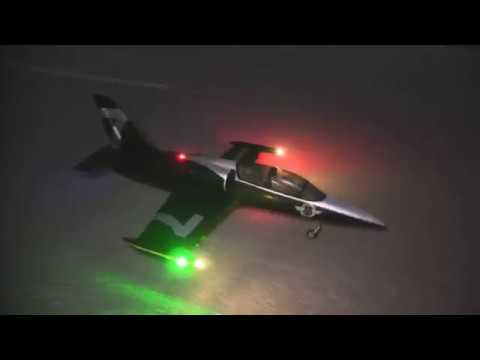
Getting close to flying my new L39. I will be flying off of decomposed granite road way. I'm thinking about covering the cheater inlet with a screen mesh. any thoughts?Leave a comment:
-
Leave a comment:
-
All my "spares" that come off existing planes are "undesirable". That's why they became spares. The servos in the horizontal stab are 1/2 inside the tail of the fuse. Yanking them out shouldn't damage too much that can be seen. Slide a thin blade (X-acto knife) along all the edges to free up the sides of glue, then try to slide a flat bladed something under the end of the exposed servo to free the underside from the stab. Worse comes to worse, pull out the servo with needle nose pliers and if there's a lump of foam attached, cut that off as flat as you can and glue it back in the hole. The stab is already in a condition you don't like, so a little more "dislike" shouldn't bother you that much more to keep as a spare. If you don't like the way it looks now, will you ever actually use it when you need another replacement?Leave a comment:
-
Based on MRC support, the elevator servos are not to hard to replace. I just received my replacement servo but have not put it into mine yet. This is what they told me
"They are easy to replace just wiggle it lose and it will come out they are glued in with silicone."
Rich
Leave a comment:
-
-
Has anyone removed the servos from the horizontal stabilizer without tearing it up? I rolled my office chair into it and it was left in an undesirable state. I purchased a new one but after attempting to get the servos out of the original it appears I will have to destroy it to do so. The old one could be a less aesthetically pleasing spare after repair. This also seems to indicate after removal the servos will have so much glue on them they will never sit right again in the new part. What say you of vast knowledge and experience?Leave a comment:
-
I`m going to make mine an L-159 also vduniec, I have made the duck bill nose extension already, have the decals from Callie,the aircraft is ready for paint. I just have to wait untill it gets above 0 degrees here. Can`t even paint in the basement. Nice work on your paint>Leave a comment:
-
-
Have to agree here, I don't think this one needs a gyro at all myself, very smoooth flyer, flew mine in some gusty winds for the first time, I was surprised how well it handled it, landings were no problem at all, it just came right on in with full flaps as if it was nothing. But I do understand now why people use gyros, it does seem to smooth out the whole flight envelope on some jets, I don't use gyros on anything other than the 90mm F-104, I will never fly that again without one that's for sure...............:Scared:Leave a comment:
-
I say that about just about every plane... key word need. People all come back saying why wouldn’t you use something that improves the flying experience.Leave a comment:
-
The L-39 definitely doesn't need a gyro, this thing flies really smooth as is! My favorite flying jet! :Cool:Leave a comment:




Leave a comment: