


A couple of weeks ago, I saw a fellow club member who was "happy without expo". He had a beautifully built scale model, and the maiden flight was pretty exciting for him. It was all over the place. He has plenty of years of experience in (excellent) building and flying. But somehow, he took my advice on trying out 30% of expo on elevator, if only for one flight. The flight went perfect this time, and he never looked back. He can't tell me why he never wanted expo, especially now that he experienced what it actually does.
Same goes for telemetry. I've seen plenty of crashes where the wreckage reveals the blinking led of death. Those guys never even heard of real-time signal strength telemetry, the only know post-crash that they seem to have lost signal "at some point". Telemetry can give you advance warning; I don't see much disadvantage in that.
"The general rule is buy as much radio as you can afford"
True, but then you get into the brands war. In one brand you can afford the high-end model where you have an entry-level model for the same price in another brand.
For 400 Euro I have a radio that supports dual-band 900MHz and 2,4GHz in 24 channels, where another club member just bought a 20-channel radio for around 2000 Euro, single-band 2,4GHz.
I really want to stay far away from brand wars, but just wanted to make clear that you have to keep an open mind when choosing a new radio, do some research, and be aware that there isn't always an absolute correlation between quality and price. (expensive isn't always proportionally better).
-
I've seen people happy with 3ch radios. Happy with no D/R or expo, happy without telemetry. But I have seen many that update technology ever few years spending quite a bit of money along the way. Along the way there have been a number of significant advancements that cause a lot of upgrades, 27MHz to 72. Narrow band. Computerized radios. 2.4. Open source... I think that we are about to have another step with FAA caused changes and can easily see that the FCC could cause some changes to have more "control" on us.
The general rule is buy as much radio as you can afford. By "as much" means different things to different people and the type aircraft they fly. To me canned programing is important. I don't like OS. Telemetry is not important to me. Decent gimbles, well places three position switches and mandatory side sliders are. Of course, a good RF link is important, but I think most all radios do have a good RF link, It's more antennae or RX placement now. It's a lot better than the old days. I know a lot of people that don't even know how to do a range check.
I have a 18ch radio and more than a handful of planes using 12ch receivers but that's me...Leave a comment:
-
No seriously....if you are going to invest in new material, better make sure that you don't have to repeat the exercise in a couple of years. If you're into EDF jets, sooner or later 10 channels will be limiting too. There are plenty of telemetry-capable 16-channnel radios available for very affordable prices. My X20S radio cost around 400 Euro (up to 24 channels), a standard (all are telemetry capable) 8 channel receiver costs around 35 Euro, telemetry sensors about the same price. Never, ever had any problem with range or LVC, thanks to the telemetry.Leave a comment:
-
Great advice!!
I am looking to upgrade to the Spektrum NX 10 channel transmitter, that should be enough to handle any future updates.
thanks for your help!Leave a comment:
-
If you want to avoid this sort of "tragedy", it would be better to invest in a bit more advanced radio equipment, preferably with telemetry capabilities.
As I mentioned above, telemetry can monitor signal quality at the receiver for you, and warn you well in advance of any problem that might be developing.
On one occasion I had a receiver antenna that got blanked out by a hidden carbon element inside the fuselage. I did a range check, everything just fine. I got a low signal warning in flight, landed immediately, then did a 360° range check around the model, and thus found out that there was some sort of dead corner of reception at a certain angle. Without telemetry, I might have ended up with some wreckage with a blinking led on the receiver telling me there has been a problem. I take gliders hundreds of meters up, never had any problem of signal strength or signal loss.
Once you have telemetry, you can add a current sensor and have the radio calculate the consumed mAh for you and call them out, instead of guessing the remaining battery by using a timer. You don't guess the fuel remaining in your gas tank by timing how long you've been driving, do you?
Another protection that I always use in somewhat larger models is dual power supply. I add a separate receiver battery and its own BEC, and combine that with the integrated BEC of the ESC to have redundancy. I used a dual Schottky diode, a component that costs less than 1 Euro, to combine both power inputs. Now I used a 10-channel receiver (covers 24 channels really, if you use the Fbus to connect more than 10 servos) with stabilization (the auto-level is handy when I lose orientation of the model), mentioned telemetry capabilities and dual power supply input, and it costs around 50 Euro. No need for non-genuine receivers of any kind.
Fail-safe positions for each channel ensures that in case of signal loss, the model will throttle down to idle and make a shallow descending turn.
In the last 10 years since I got back to RC, I have never lost any model to signal loss (signal strength telemetry) or "brown out" (dual power supply), no LVC (current and consumption telemetry), only to pilot error.Leave a comment:
-
Using a Spektrum DX6
yes battery alarm set at 4.3v
no fail safe
no I did not perform a range check.. I know my bad!!
so I did fly it again on Saturday successfully 4 times.
things I did after the signal loss ordeal, I replaced the transmitter battery’s ( pretty sure that was not the problem, I’ve flown many times with the battery’s at 4.6v)
second I swapped out the ar6210 spektrum receiver ( I purchased that receiver from ebay, I’ve been reading that those receivers are not genuine spektrum receiver.. yea I know that was dumb on my part! Don’t know why I tried going cheap on the receiver after spending over 700$ on the air plane..lesson learned!
I put in a brand new spektrum ar6610T with a satellite with telemetry and fail safe, it flew great and no problems. And yes I range checked before flying!
Leave a comment:
-
Quite the scary experience... but we can thankfully laugh at it now :')

Leave a comment:
-
So many questions here....
1) What radio are you using?
2) Does it have a low battery alarm of sorts?
3) Does it have failsafe settings?
4) Did you perform a range check before your maiden flight?
Signal strength telemetry can avoid this sort of problem alltogether. It will warn you of degrading signal strength before it becomes a problem. A blinking LED on a receiver after a crash isn't helping much in preventing a crash.
You have a 4,2kg unguided missile flying around, ready to hurt someone when radio equipment fails you like that. If your radio doesn't have any of the safety features mentioned above, you should definitely buy one that has them. I don't want to be or even sound pedantic, I'm just a bit worried at this point.Leave a comment:
-
Hey guy,
I maiden my F22 on Tuesday I put 4 packs thru her and she flys awesome and lands like a feather, flew so good i had to take her up again today looking to get more stick time, ran the first pack in it no problem, second flight I was at about 1:30 on the timer and she pitched up and did a half roll (lost radio signal) I think it either cut power buy it self or was me but she went into the corn field, I retrieved it, it’s a little banged up but it will fly again. I got it back on the bench and opened the hatch and saw the receiver (spektrum ar6210 with satellite)had the normal solid red light on and also had a blinking orange light, guys said that meant it lost signal, the transmitter battery was reading about 4.9 volts so I’m not sure if that was to low and caused the lost signal or is there something else I should be looking into, any help or suggestions are appreciated!
thanksLeave a comment:
-
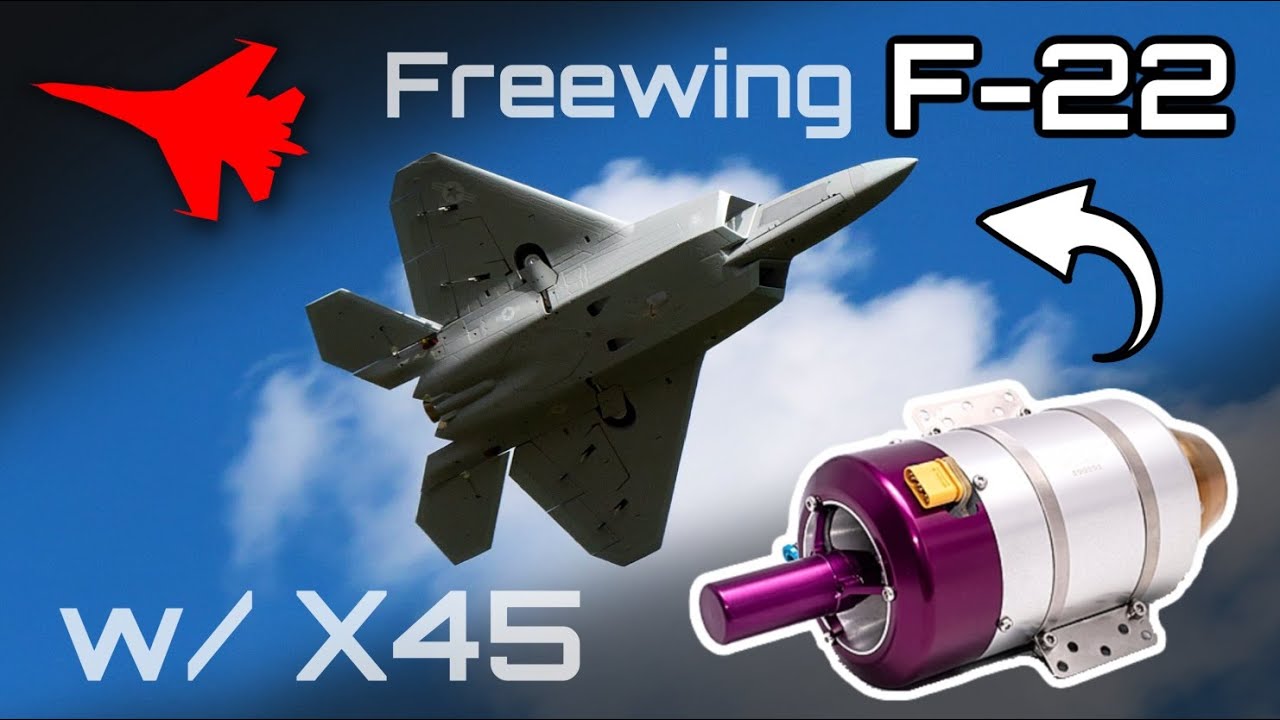
Another flight with janmb 's F-22.
More aerobatics going on in this one as I slowly got used to it.
(Thanks again!) :D
Leave a comment:
-
That must be it then... a bit overkill by FW I guess, hmmm...
Meanwhile, on other news...
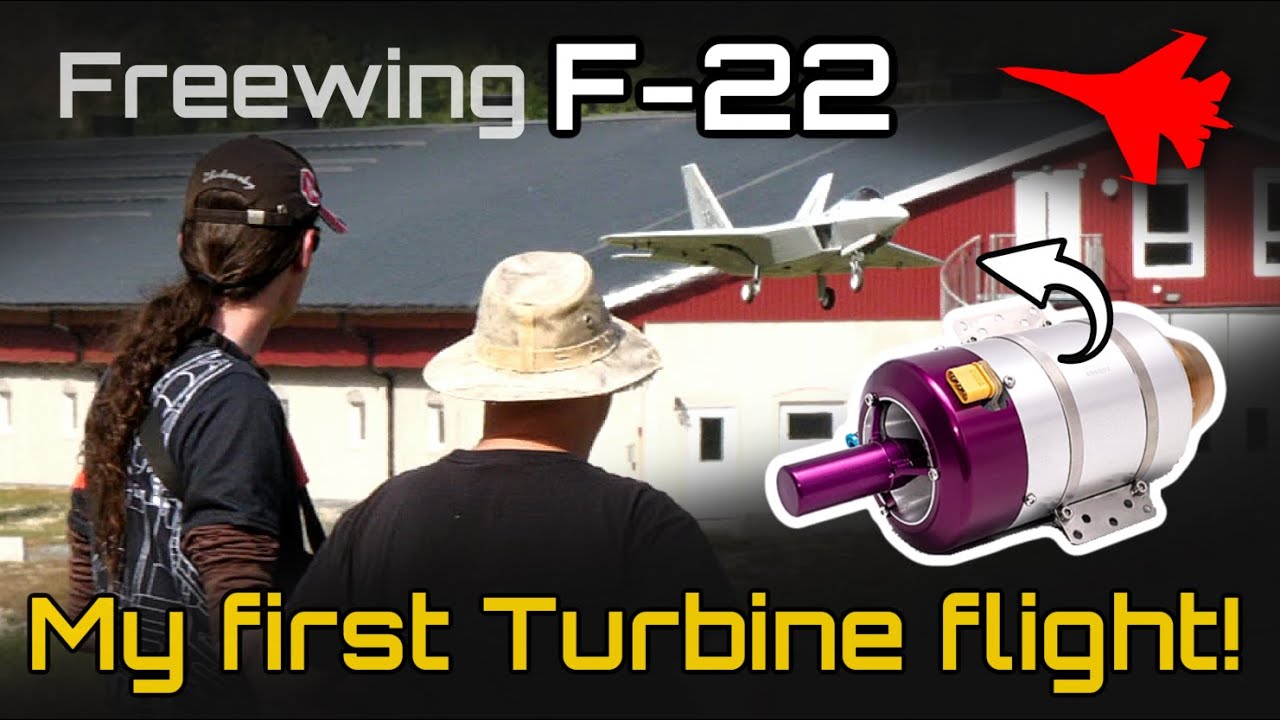

Big thanks to janmb for giving me this opportunity!
Will post more flights (and more exciting too) soon!

Leave a comment:
-
I did weigh, but the difference was small. I didn't even take note of the difference, a couple of grams only. The only thing that I cut away was some sort of star-shaped plastic plates, converging towards the cone's top. Now it's more or less empty.
I agree that the nose cone does feel heavy for its size, but I guess it's just heavy plastic that has been used, in a thick wall.Leave a comment:
-
As you can see in the picture that I attached, I did carve away the foam, and I only found a lot of plastic behind it. I "dremeled" away as much as I could, and got rid of a bit of dead weight (I forgot how much exactly, but it wasn't spectacular).Leave a comment:
-
Yep. It's really meant to run that wooden lip.
Mine came with it and ordered almost a year ago.
Also, I suspect that nose has extra ballast weight fitted inside, which doesn't help.
I'm betting if we carve the foam from the back we should find it.
I may try myself soon enough.Leave a comment:
-
Well, I realized that things with the knuckles might be different on concrete while I was writing my post, and you can confirm apparently.
Oddly enough, I have the problem only at lower speeds, as mentioned during sharp turns after landing. I guess at higher speeds the wheels have less friction with the grass and allow more sideways movements, and the wings having lift can only help at that point.
About the nose cone, I would tend to disagree that grass runway would be easier on it; just like with 1:1, grass gives quite a rougher ride. I've had the cone come off (before my mod) during the (nominal) takeoff run, and even during rotation once.
I think the added lip really makes a big difference hereLeave a comment:
-
I think newer ones may come with a ply piece for the nose. Mine didn't. I added extra magnets and it still came off. I fly of pavement and flying off grass may be okay with the nose and the knuckles...Leave a comment:
-
I didn't glue on the nose cone; I added a "lip" at the bottom that slides into the fuselage, and added just one rare earth magnet on the top part of the cone. It is rock solid now, and requires a minimal pull to get it off. The lip at the bottom prevents the cone from pivoting downward, the top magnet keeps it in place. Solid.
The biggest advantage of not gluing the nose on is that it is able to come off when it needs to. I've had a heavy landing in taller grass, the nose came off. If it had been glued on, I would most certainly have had damage to the fuselage (it crumbles easily in front of the canopy).
A good alignment of the nose wheel makes a steering gyro more or less redundant.
You can temporarily replace the nose wheel shaft by a long bar, to visualize the wheel alignment angle. Once the wheel is properly aligned, and you have plenty of expo on the nose wheel steering, you shouldn't have any problem taking off. I had a couple of takeoffs with play one the main gear (grub screw problem mentioned above), making the plane diverting from the center-line and requiring quite a bit of corrections; never had the knuckle problem doing that (the plane drifted from left to right over a couple of meters at respectable speed). I've only had problems with the main gear knuckles when I made very sharp turns after landing (to avoid an over-run into a ditch). Flipped her a couple of times.
As I fly on a grass runway, things might be different on a concrete one, I don't know.
As far as the gear grub screw: I had troubles tightening the screws to get the gear leg firmly fixed in place. Turned out that the grub screw couldn't protrude deep enough to really push onto the gear leg pin. I had to thread some M3 a bit deeper into the gear leg, and the problem was fixed.
But most of all: enjoy this wonderful model!Leave a comment:
-
Thanks Evan!
I will break out the Loctite and go through it.
I know the dam nose cone on my F16 is always popping off at the field and when I bring it back into my hanger, I mentioned glueing it on to the guys at the field but was recommended not too, but I think I will glue it on!
I’ve heard good things about the assan steering gyro but where would I purchase it from?
thanks again!Leave a comment:


Leave a comment: