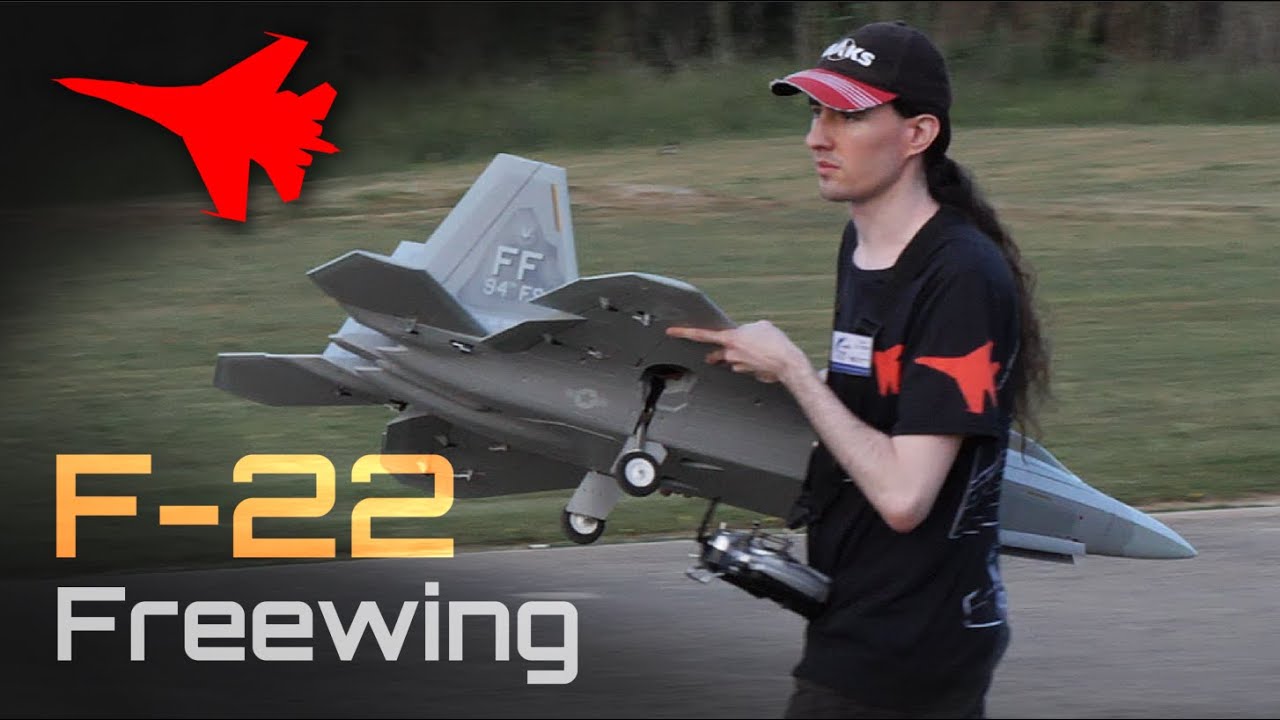
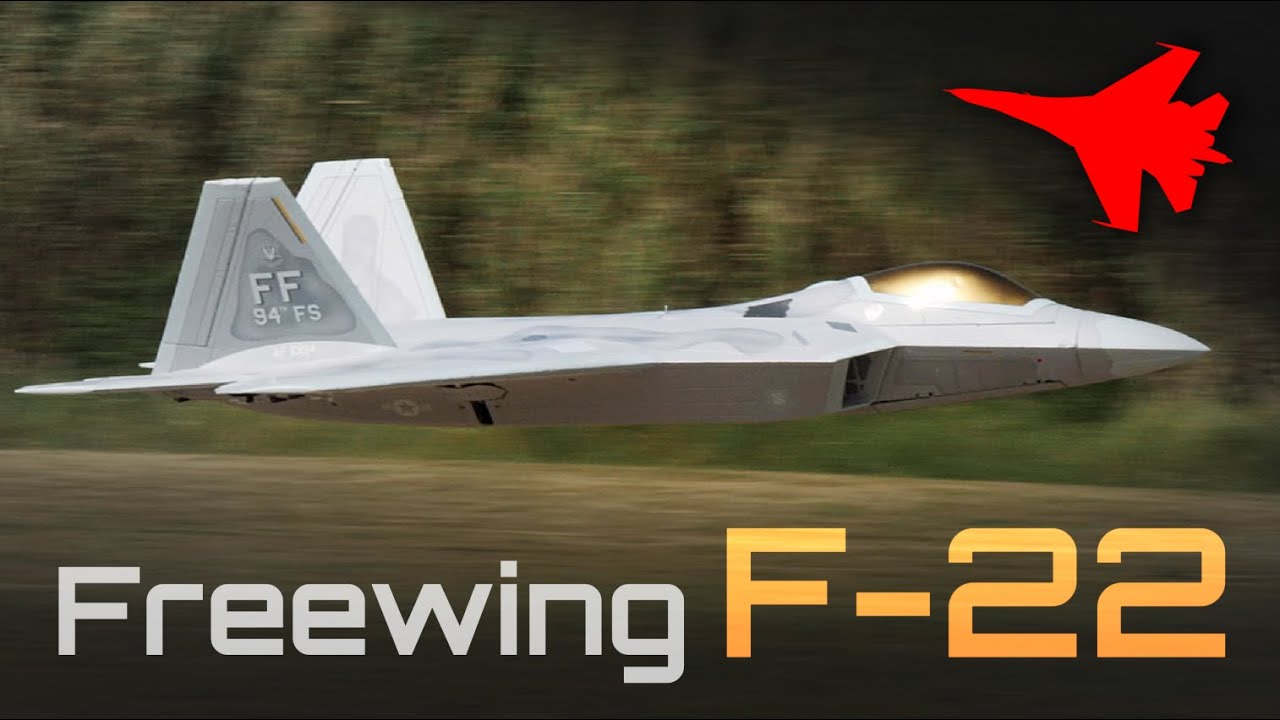
I took the F-22 up today as my first freewing aircraft. Extremely impressed, and was generally locked in by the book. Flew on an admiral 5000 for the maiden. Easy, and great flyer.
Does anybody own this plane and the Eflite 90mm Viper ? Would like your opinion on how they fly compared to each other ?
I have both. Both fly on 6s 6000's. Both are solid flyers. Both perform well on grass fields.
Top speed on my F-22 is 120mph. the Viper 116mph.
Both slow fly very well. The F-22 will high alpha a bit better then the Viper. Both have more than enough power to accelerate out of high alpha or bad landing setups.
Honestly they are two of the best flying EDF's I own. Choosing between them is very, very difficult...perhaps that's why I have both of them.
Choosing one is going to come down to which one is more visually appealing to you as their flight characteristics are pretty much identical.
I have both. The Viper is stock. The F-22 is 8s, so the comparison may not be totally fair.
The Viper is one of the best flying EDFs I've ever owned. It's fast and very solid - tracks extremely well both on the ground and in the air, cuts through the air very precisely. With full flaps, it can slow down and float along quite slowly and still handle very well.
The F-22 is not far behind. It's also fast, naturally floaty with or without flaps due to its big, fat wings. It feels like it has to try harder to fly fast but does it anyway. Can do a high alpha pass easily and without drama and has lots of low end grunt to get out of it.
If the F-22 wasn't 8s, I'd probably pick the Viper just because it performs better and can be flown with more confidence. Presence in the air, the Viper is tops because it's more colorful. The drab military coloration of the F-22 makes it a bit bland when it's a bit farther away. Up close both look spectacular on a fly by.
Which one you choose if you could only have one, depends on whether you prefer a more visible sport type jet or a more menacing military type jet. Performance wise neither will disappoint.
I use a Frsky SR10 Pro receiver in mine, which has dual power supply input.
But you could have a look at the Redundancy Bus devices too, which not only have dual power supply input, but also dual receiver input through sbus, and over-current protection on each separate channel. The new RB25 series devices are expected around May of this year, which have even more interesting features.
About BEC load sharing, I don't know if that is even required here. As far as I know, and I might be terribly wrong, devices with dual power supply select one power supply at a time, but I would be interested to learn if there are devices that do actual load sharing, even though I think that with this type of models it really isn't required.
What you could do, is split your power supply over 2 power "buses", and have one BEC supply all servos and your receiver, and the other one supplying power to retracts. But again, I think that is overkill for this model. In 1:1 aviation, loads are spread over different electrical buses, to enable some sort of priority in power supply. The most essential devices are thus connected to the "essential bus", which can be powered by an onboard battery (30 minutes of power) in case all other power sources (engine generators, APU) fail. Airbus even uses a so-called RAT (Ram Air Turbine), a sort of windmill device that drives a generator, because in a fly-by-wire airplane you can't afford losing power at all.
I would love to implement stuff like this in an RC model, just for the heck of it, but it would be pointless. I prefer flying them. 😊
I just installed exactly the same one in mine 🙂
I also use dual power supply in somewhat larger or more complex (more servos) models. In the 22, I have a receiver with dual power supply input, but if you don't have any of these, you can also use dual Schottky diode devices, they cost less than a buck, and they are the cheapest and easiest way to combine two power sources. In my F22, I thus added a separate 20A BEC powered by a 3S 890mAh receiver battery.
Great advice
I have now checked Schottky diode installations and they will definitely be used in some of my planes moving forward. That being said, an installation like that provides redundancy but not load sharing by the different BEC:s, or is my electrical knowledge lacking? I use Radiomaster 16ch receiver with 8ch PWM and 8ch SBUS, this time planning on having flaps and gear via SBUS/PWM/blue box, separately powered by the ESC. I will find out if it's doable and how complex it gets. What receiver do you use?











Leave a comment: