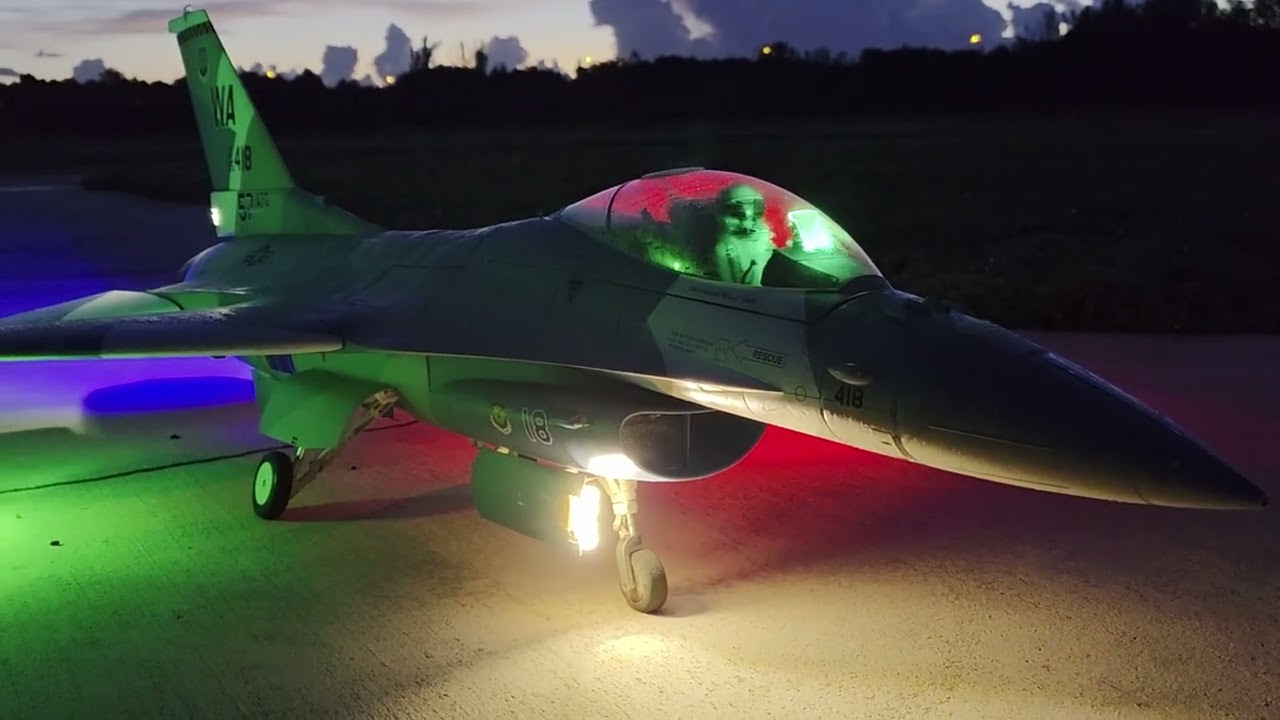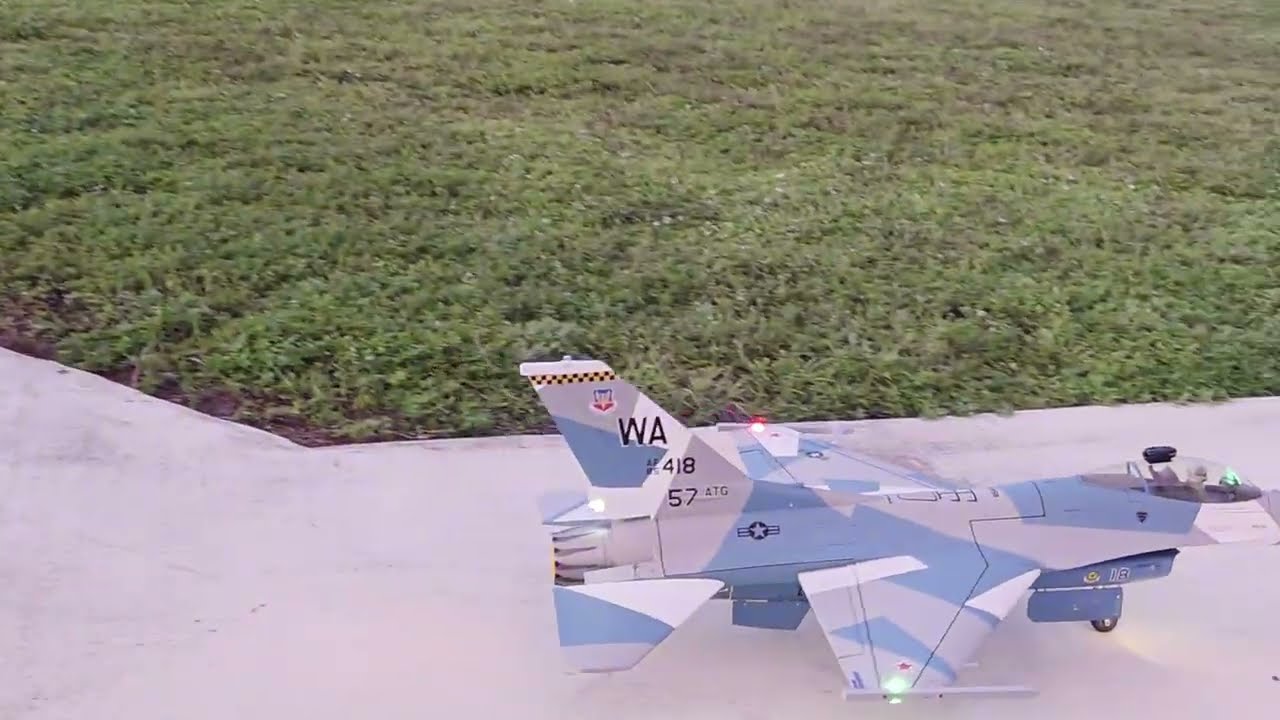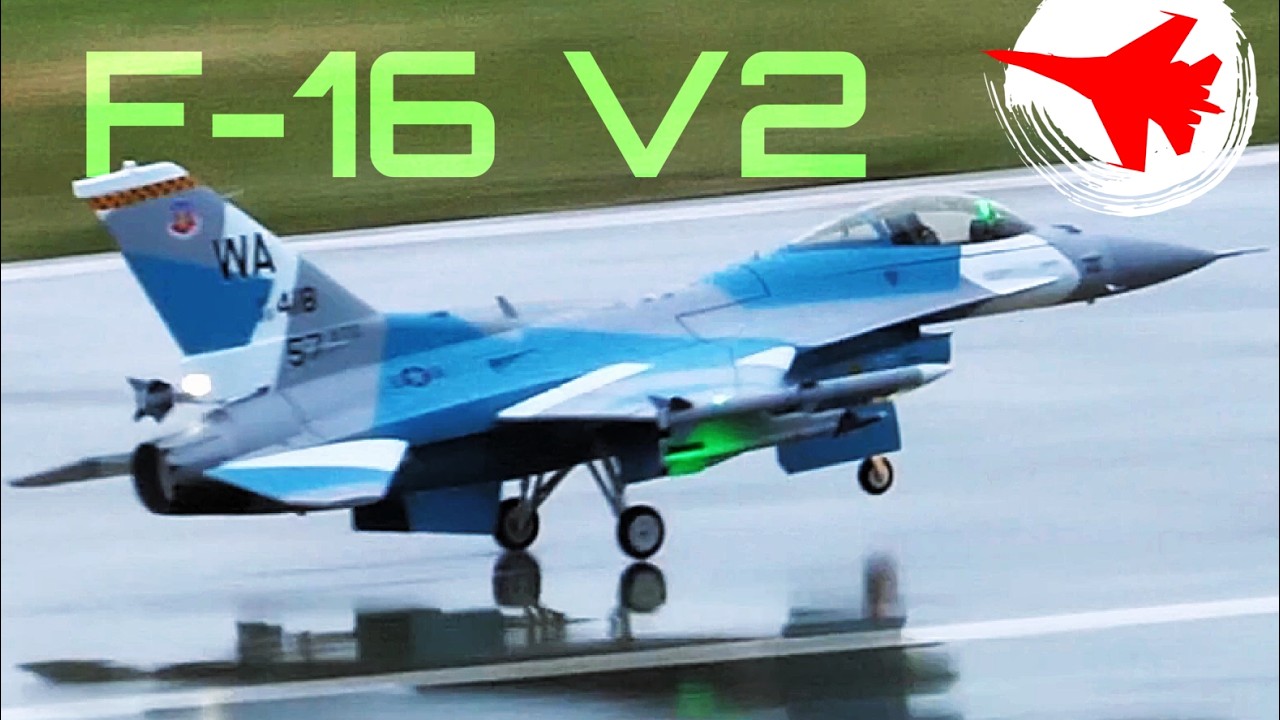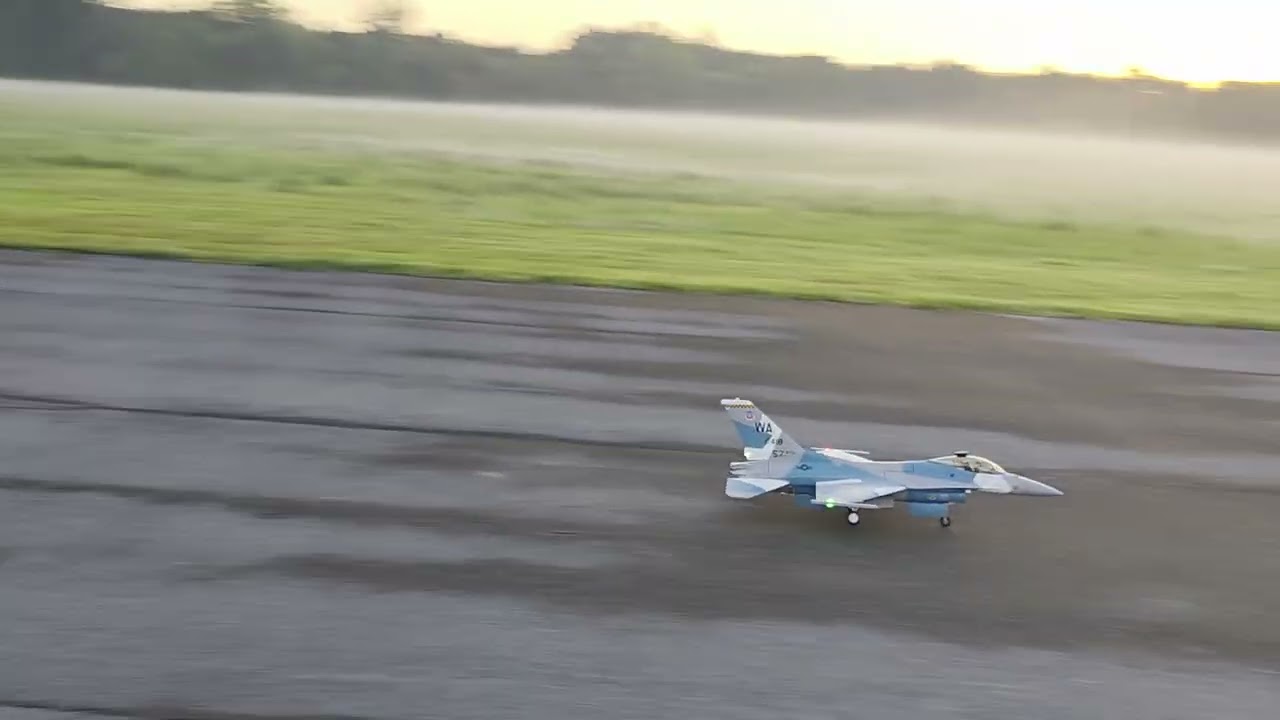
Rainy flights are fun flights!
Official Freewing 90mm F-16 V2 EDF Jet Thread
Collapse
X
-
-
-
"f4u" is precisedly correct on this. I think I touched upon this "fix" in this thread somewhere but it's such a long thread, it's not easy to find. I don't know if your case is the same as the guy on Facebook, but in his case, it would appear as though the detent tab on the articulated arm is also broken, such that when the gear is deployed, the detent prevents the arm from over rotation. IE, it helps to "lock" the arm in the slightly over rotated position.
Hi
Was riding my racebike this morning and thinking about the bend, and I came also on the idea that the shaft must have bend, coming out of the retract.
Get it out put in a vise and give it a smale twist.
Assembled the retract, tested it and it's fine again.
Thanks for pointing me in the right direction.
Kind regards Hans
And yes, the main problem is the long end of that rod at the base of the arm. After a hard hit or repeated soft hits, that rod gets twisted as f4u indicated. In addition, the hex screw that locks down on that "flat" section of the rod may also cause a gouge in the flat. This would mean that the flat must be ground to get the gouge out. Untwisting the rod and refreshing the flat will fix it so that the rod can be "clocked" properly to work the strut through the prescibed end points. As said, once damage and fixed, there is a greater likelihood that the rod will twist very easily next time. You might consider getting a couple spares of that articulate arm.Leave a comment:
-
-
The shaft coming out of the retract..... It's twisted.. the retract in the down position should b more forward and that scissors part in the bottom picture almost straight. That's from personal experience. My friend and I have had same problem... Flying off grass. I've repaired the twist. But that part is cheap and easy to get.. Ali express is easy
Hi
Was riding my racebike this morning and thinking about the bend, and I came also on the idea that the shaft must have bend, coming out of the retract.
Get it out put in a vise and give it a smale twist.
Assembled the retract, tested it and it's fine again.
Thanks for pointing me in the right direction.
Kind regards HansLeave a comment:
-
Mine is in car for tomorrow flying. If U want more pics please ask
Leave a comment:
-
The shaft coming out of the retract..... It's twisted.. the retract in the down position should b more forward and that scissors part in the bottom picture almost straight. That's from personal experience. My friend and I have had same problem... Flying off grass. I've repaired the twist. But that part is cheap and easy to get.. Ali express is easyLeave a comment:
-
Pilots
Can anyone help me out her?!
Hello, I am reaching out for guidance regarding my newly acquired used Freewing F16 90 v2. Upon purchasing the aircraft, I was informed that it had experienced a hard landing, resulting in damage to...
I don't have facebook and I search internet to find person Charles D Linear who helped him solving the problem???
I have same issue and he wrote this
Joe El Padrino
Auteur
I got it fixed thank to Charles D Linear that help me . I appreciate everyone help
but sadly he didn't wright down how he fixed it......
Thanks guys for helping me out with this issue.
Regards Hans
Leave a comment:
-
Thank you!
I don't have anyone doing that work, I do everything myself!
All the edition and distribution... I'm the only one working on the channel. Well, dad films the videos when I'm on the sticks, because I can't do that myself while flying, hahaha!
Leave a comment:
-
Absolutely, this sequence looks like it's the full-size F-22... really beautifully filmed! I've never managed to make a video like that... I also don't have a good film production person like you seem to have.Following the popular sentiment I'll refrain from further replying to XViper (despite him explicity calling me out) for civility's sake.
I guess, to any grown up reading these pages, enough was already said for each to make their own informed opinion and judgements.
I'm genuinely happy to hear that! :)
I would never disagree with that. I think both Jon and I explicitly remind pilots that our setups are not exclusively a CG thing. Pretty much everytime I recommend an aft CG setting on a forum, I mostly always try to warn about the high expo required for that to work and to suggest pilots to perform changes in small increments, rather than jumping straight to this or that CG.
And then again, apples to apples, and oranges to oranges... One thing is to recommend the use of slightly less nose heavy CGs than manufacturers typically recommend. This alone already usually helps improve model performance and safety of operation by huge margins. No gyro nor tail heaviness involved, that only comes if you keep moving the CG back. Then another thing is the extreme setups you, Jon and I (along others) may run bringing the jet capabilities to the limit by pushing the CG past the neutral point and relying on artificial stabilization just like full scale jets.
Well, of course that's an advanced setup that only profficient pilots (not just in flight skill but technical knowledge) should attempt. I would think that these things should be pretty self evident and I try to convey that message (what setups are okay, and which ones are 'extreme' whenever I'm giving a recommendation. And as far as I've seen Jon's videos (not all of them but quite a bunch) I never got the feeling that he was dishonest about the way he was portraying his setups. Heck, he openly refuses to fly stock setups and mostly discloses that at the beginning of most of his videos, clearly stating that he aims at showing what's the ultimate potential about what said models are truly capable of. I don't know how much clearer can one make these sort of claims.
Anyway, long story short, I don't consider one needs a gyro or to be superman to run a slightly more balanced CG setup.
If one choses to bring it to the extreme, then yes, skills of all types are a must and gyros very welcome, and at some point, also required. ;)
Well, at the risk of becoming boring let me emphasize on the same again:
A true tail heavy setup (As in: actually unstable, negative longitudinal static margin in engineering terms) is going to be a bunch for most pilots. Can even be for skilled pilots.
That's one thing.
But moving CG back from excessive nose heavy recommendations to a more reasonable, non-tailheavy position will actually let pilots enjoy flying much better. Not just the acro junkies but also the newbies and the 'self-dubbed' scale folk.
Construing that as 'tail-heaviness' is typically either ignorant or dishonest. Not accusing you of any of that though, but I mean, that's something I'm often replied/attack with when I give a CG recommendation, typically by pilots who irrationally defend manufacturers recommendations as biblical gospel. Manufacturers are people too, and subject to error just like the rest of earthling subjects, myself included. ;)
Right???

And then to film it in slow motion and watch all the fast surface corrections... aaaaaaah!
(Helpless drooling intensifies)
Leave a comment:
-
I think all manufacturers are absolutely competent and know what they're doing. They just want to be on the safe side and perhaps shift the center of gravity markings slightly forward after determining the correct center of gravity in flight. This prevents the end customer from accidentally placing the center of gravity too far back when measuring it with their finger and potentially complaining to the manufacturer. In short, I think the often forward-marked center of gravity is intentional and serves as a safety measure, as most (hobby pilots) probably handle it better on their first flight than with a slightly rearward center of gravity. However, this is just my assumption, and it seems logical to me. With the F-16 90mm V2 8S, which is the subject here, it can be fatal if the center of gravity is a little too far back for inexperienced pilots... less likely if it's too far forward. Again, this is just my own experience.THIS! The exact point I was making. To make a blanket statement without specific caveats is a tremendous dis-service. And in most of the blanket statements, use of gyros is a "between the lines" easter egg hunt and a separate entity from the CG talk. Those beginning their journey in jets are usually not gyro literate and they do NOT fly like these guys who warn against flying at recommended CG. Are companies like Freewing, Flightline unknowledgeable when they R&D planes? Derelict in their recommendations? Is Motion RC, in their set up videos, flight reviews and recommendations acting irresponsibly to their customers? I think not. Are buyers crashing their planes left, right and center when starting out at the book CG and gyro/no gyro? I think not. Motion and other Freewing sellers would be getting inundated with demands for refunds. So, are they?
Now I think we go back and continue with Dividebysandwich's comment...
Leave a comment:

-
-
Following the popular sentiment I'll refrain from further replying to XViper (despite him explicity calling me out) for civility's sake.
I guess, to any grown up reading these pages, enough was already said for each to make their own informed opinion and judgements.
I'm genuinely happy to hear that! :)
I would never disagree with that. I think both Jon and I explicitly remind pilots that our setups are not exclusively a CG thing. Pretty much everytime I recommend an aft CG setting on a forum, I mostly always try to warn about the high expo required for that to work and to suggest pilots to perform changes in small increments, rather than jumping straight to this or that CG.
And then again, apples to apples, and oranges to oranges... One thing is to recommend the use of slightly less nose heavy CGs than manufacturers typically recommend. This alone already usually helps improve model performance and safety of operation by huge margins. No gyro nor tail heaviness involved, that only comes if you keep moving the CG back. Then another thing is the extreme setups you, Jon and I (along others) may run bringing the jet capabilities to the limit by pushing the CG past the neutral point and relying on artificial stabilization just like full scale jets.
Well, of course that's an advanced setup that only profficient pilots (not just in flight skill but technical knowledge) should attempt. I would think that these things should be pretty self evident and I try to convey that message (what setups are okay, and which ones are 'extreme' whenever I'm giving a recommendation. And as far as I've seen Jon's videos (not all of them but quite a bunch) I never got the feeling that he was dishonest about the way he was portraying his setups. Heck, he openly refuses to fly stock setups and mostly discloses that at the beginning of most of his videos, clearly stating that he aims at showing what's the ultimate potential about what said models are truly capable of. I don't know how much clearer can one make these sort of claims.
Anyway, long story short, I don't consider one needs a gyro or to be superman to run a slightly more balanced CG setup.
If one choses to bring it to the extreme, then yes, skills of all types are a must and gyros very welcome, and at some point, also required. ;)
Well, at the risk of becoming boring let me emphasize on the same again:
A true tail heavy setup (As in: actually unstable, negative longitudinal static margin in engineering terms) is going to be a bunch for most pilots. Can even be for skilled pilots.
That's one thing.
But moving CG back from excessive nose heavy recommendations to a more reasonable, non-tailheavy position will actually let pilots enjoy flying much better. Not just the acro junkies but also the newbies and the 'self-dubbed' scale folk.
Construing that as 'tail-heaviness' is typically either ignorant or dishonest. Not accusing you of any of that though, but I mean, that's something I'm often replied/attack with when I give a CG recommendation, typically by pilots who irrationally defend manufacturers recommendations as biblical gospel. Manufacturers are people too, and subject to error just like the rest of earthling subjects, myself included. ;)
Right???

And then to film it in slow motion and watch all the fast surface corrections... aaaaaaah!
(Helpless drooling intensifies)
Leave a comment:
-
Not sure what people call an "attack" now. I saw some criticism with an explanation of why. I know people have called me names and when called out about it said they were just joking. Can we let it drop now?Leave a comment:


Leave a comment: