



First note I am going to be flying this in both rate mode and heading hold gyro modes. Also, a disclaimer: I have not yet flown this heli and I have never actually flown with any ZYX gyro. In fact, I have only recently graduated up to the 450 class after having flown only micros for the past six years. I do however, have a pretty deep understanding of the physics, electronics and software/firmware aspects of collective pitch RC helicopters having spent years devouring all of the knowledge I can from HeliFreak and other sources. Also note that I am a degreed engineer with decades of work experience in both the aerospace and systems software fields (I am recently retired). To learn about the ZYX-S2 gyro specifically, I recently spent a couple days digesting 5 years worth of posts written on both the gargantuan ZYX thread over on RCGroups and the Advanced ZYX tuning and troubleshooting thread on HeliFreak. In other words, I have a lot of book knowledge on the subject but very little hands on experience with this unit.
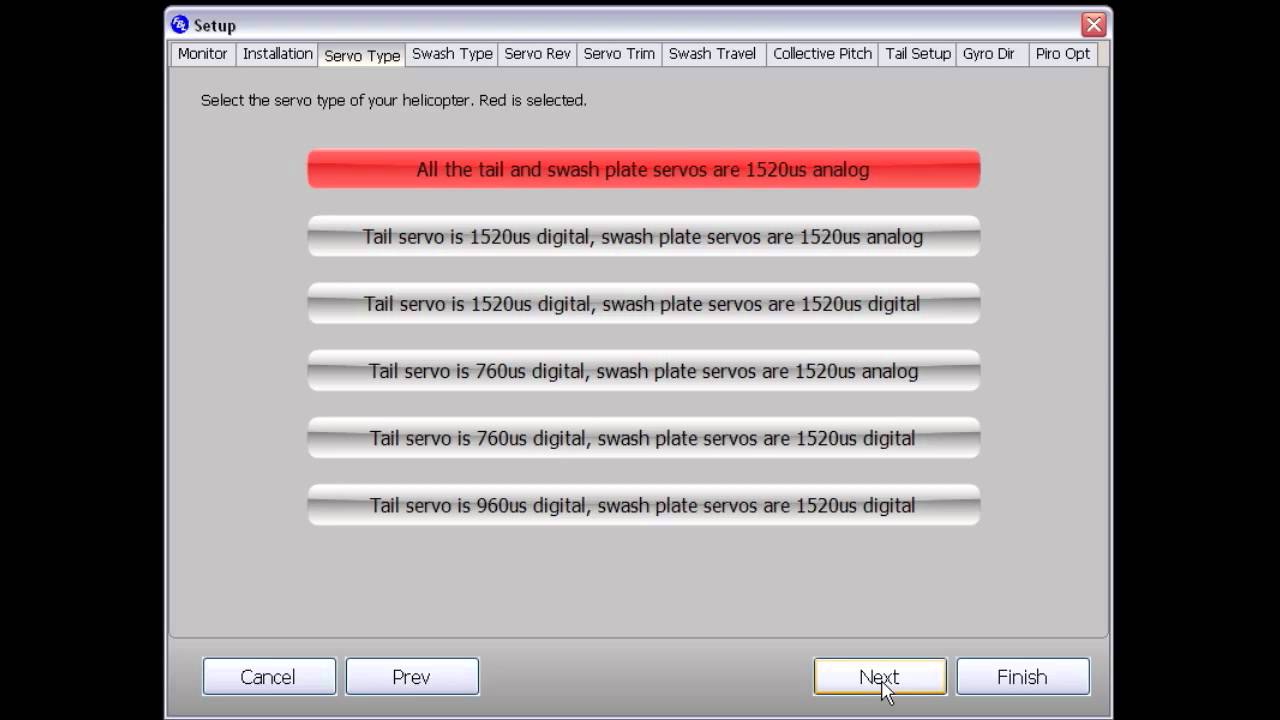
That said, it is my understanding that the proper way to optimize the tail setup (for all helis sizes and all FBL controllers), is to first adjust the rudder linkage such that with the gyro set to rate mode and a lowish gain, the heli does not rotate in yaw (and will weathervane into any prevailing wind) when the Tx is sending out zero on the rudder channel, and the rudder servo horn is 90° to the linkage. To achieve this, the tail blades will have some amount of pre-set AOA to counter the rotor torque in a hover. This value is determined through trial and error, but the 8° value specified in the ZYX-S2 manual is probably a pretty good starting point. Once the zero torque balance point is established in rate mode, the plus and minus travel limits are then set to the maximum values achievable without binding (and with the ZYX-S2, this is done in the assistant software SETUP->TRAVEL page). Once the center point and limits are established, then the optimal heading hold gyro value is determined by starting off low, then working up to where the tail starts to wag in fast forward flight. Once the wagging point is determined, the gain is then dropped back down a couple clicks to where the wagging stops.
Although it is true that a tail will hold just fine in heading hold mode with the blades set to zero pitch with the servo arms at 90° and the rudder channel centered, (and many 3D pilots who only fly in heading hold do set things up this way), this setup will simply not work in rate mode. If you talk to the scale heli pilots, you will discover that many of them also like to fly in rate mode.
And +58 is still WAY too high for the heading hold gain value - as displayed in the ZYX-assistant SETUP MONITOR page. The channel output value on the Tx is NOT necessarily the same as the value you see on the MONITOR page - (e.g. a CH5 output value of 58 on a 0-100 scale Tx will result in a value of +16 on the MONITOR page and I'm guessing that this is what is happening with whomever is telling you that 58 is a good value).
That said, it is my understanding that the proper way to optimize the tail setup (for all helis sizes and all FBL controllers), is to first adjust the rudder linkage such that with the gyro set to rate mode and a lowish gain, the heli does not rotate in yaw (and will weathervane into any prevailing wind) when the Tx is sending out zero on the rudder channel, and the rudder servo horn is 90° to the linkage. To achieve this, the tail blades will have some amount of pre-set AOA to counter the rotor torque in a hover. This value is determined through trial and error, but the 8° value specified in the ZYX-S2 manual is probably a pretty good starting point. Once the zero torque balance point is established in rate mode, the plus and minus travel limits are then set to the maximum values achievable without binding (and with the ZYX-S2, this is done in the assistant software SETUP->TRAVEL page). Once the center point and limits are established, then the optimal heading hold gyro value is determined by starting off low, then working up to where the tail starts to wag in fast forward flight. Once the wagging point is determined, the gain is then dropped back down a couple clicks to where the wagging stops.
Although it is true that a tail will hold just fine in heading hold mode with the blades set to zero pitch with the servo arms at 90° and the rudder channel centered, (and many 3D pilots who only fly in heading hold do set things up this way), this setup will simply not work in rate mode. If you talk to the scale heli pilots, you will discover that many of them also like to fly in rate mode.
And +58 is still WAY too high for the heading hold gain value - as displayed in the ZYX-assistant SETUP MONITOR page. The channel output value on the Tx is NOT necessarily the same as the value you see on the MONITOR page - (e.g. a CH5 output value of 58 on a 0-100 scale Tx will result in a value of +16 on the MONITOR page and I'm guessing that this is what is happening with whomever is telling you that 58 is a good value).




Comment