


Originally posted by Elbee View Post
I'm thinking more an open framework cam & pin attached to a separated LE.
This is not my original drawing, different author, in theory the principle would be similar.
Linear servo(s) for deployment; could be mixed with "Flap switch, Throttle setting, both???
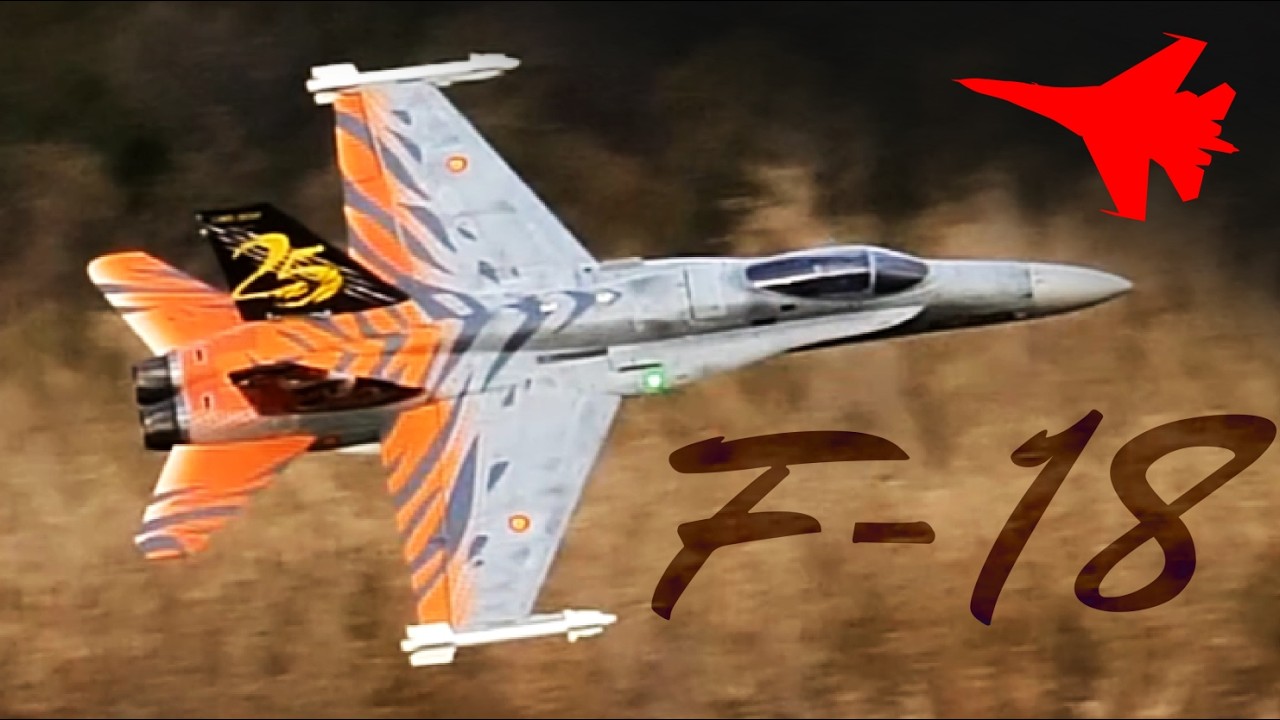
That wouldn't be scale for a Hornet though. Hornets (as most modern fighter jets), use leading edge flaps, not slats. They don't leave a gap nor extend forward, only droop down. ;)
As for implementation logic, I'd go for the following:
1 - Droop down with flaps. (Easiest)
2 - G-force induced through telemetry. (The higher the Gs, the more droop, on a ramp that went from 1.2Gs to 4Gs, 0 to 100% deflection, for example. This would need fine tuning though).
3 - Alteratively, gyro controlled (unidirectional) so that when there's pitch up rate, the LEFs droop down).
4 - Pitch input linked (Droop down above certain elevator stick input).
5 - Switchable offset (Drooping down on a 2 or 3 position switch like flaps, but without flaps, for things like sustained high alpha).
Ideally you'd only want them to be actuated as a function of AoA, but estimating AoA on a model aircraft isn't trivial, so the options above cover some of the scenarios of interest.
Airguardian
You are so correct, uncertain what I was thinking.
Thanks for setting me straight.
I would think that dropping the LE would be a simpler design than a moving LE.
Best, LB






 will try
 don't think I've ever touched the rudder
Leave a comment: