-
-
Yes to both IMO.
Flaps deflect wing airflow wake, causing the stabs to have more effective angle of attack (AKA, they produce more lift force). This is in fact the reason that deploying flaps on this bird requires little to no pitch compensation on the stabs, kinda like the Su-35.
But unlike maneuvering through a looping or a turn where airflow mostly aligns with stabs and causes a small load, deploying flaps causes a static load condition. More so if flying fast and diving.
Comment
-
So it's more about the air 'coming over the top of the wing' (notwithstanding that it's actually the wing moving through the air lol), essentially being deflected straight into the path of the stab?
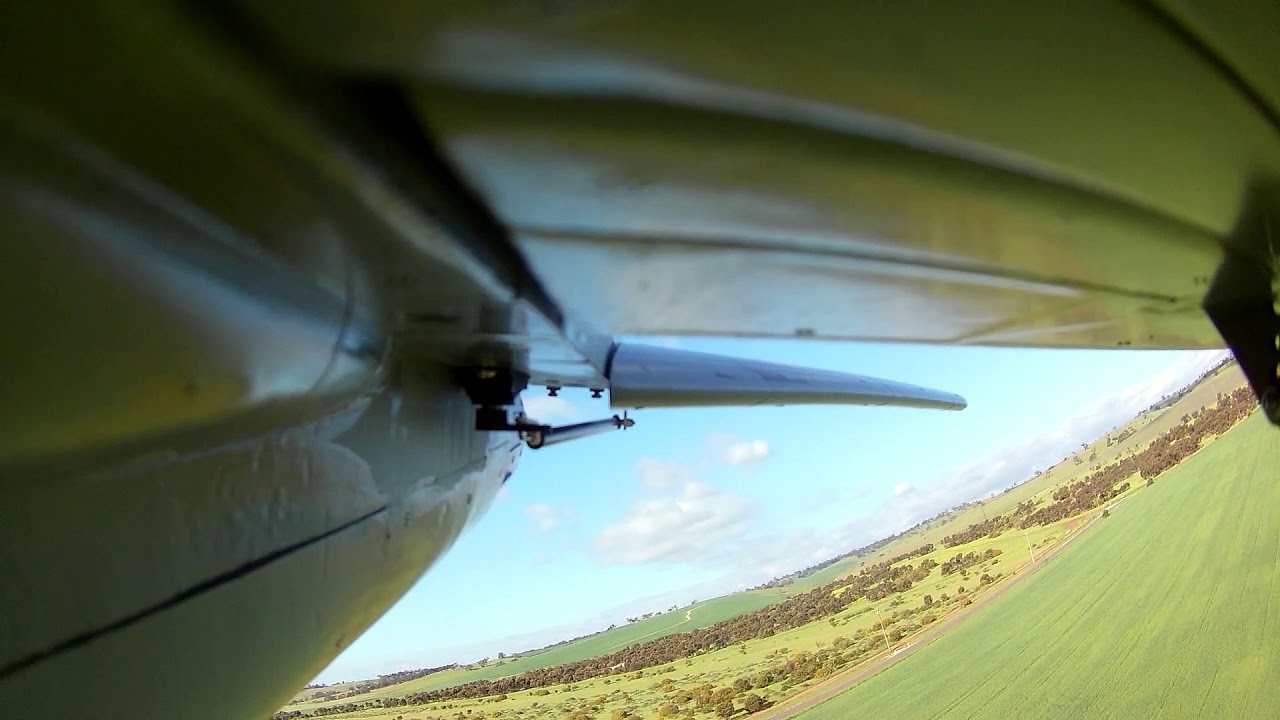
EDIT: just trawled my footage folder and have about 2 minutes of flying from my maiden day, with the camera pointed straight at the horizontal stab. I'll upload it to youtube and you guys can go crazy with the analysis lol (dont worry it's not a monetised channel). Unfortunately no footage of high energy/flaps down configuration because, well, i generally dont do that.
Here's a teaser. Got flex? This is particularly noticeable when she's settling in for a fast pass along the flight line.
Comment
-
Comment
-
There seems to be a bit of flex but nothing crazy. I guess the failures happen on just the few airframes that may have some glue problems and/or under the most taxing conditions (dive at full throttle with flaps down and nose heavy).Comment
-
-
I think it kinda have to be flap induced, or at least they make it worse.
I maidened mine with a rear facing cam, which unfortunately cut out halfway through the flight, but I did get a fair bit of footage of both half flaps and no flaps. Flew to the first couple laps with takeoff flaps to get that flight mode trimmed out first. Don't see any unusual amount of flexing at all, but that was typically around 50% throttle too, maybe a touch more, but nowhere near wot.
Freewing A-10 turbine conversion: http://fb.me/FreewingA10TurbineConversionComment
-
Looking at this flexing makes me feel like stressing an aspect that has somewhat been tuned out of the discussion: CG CG CG CG!
If we can conclude that the elevator setup in general is marginal (regardless of why really), good CG becomes more important than ever. This is a heavy bird, far more so than most foamies most of the customers have operated before. The loads on FFS elevators in this weight class are quite a lot higher than we are used to with foamies. A good CG not only makes the model feel a lot lighter and more willing to accept pilot commands, but also greatly reduces stress on the whole elevator setup.
Get your CG right!
I would go so far as to claim flying this model on any CG less than 15 mm aft of the CG marks should be considered unsafe. The model is perfectly stable and benign at +15
Freewing A-10 turbine conversion: http://fb.me/FreewingA10TurbineConversionComment
-
In my case, the plane dives a bit when applying full flaps. So more elevator is needed to keep it level. So more force on the stab. And I already noticed this when flying not fast at all. So I can imagine that full flaps at higher speed will mean even more force on the stabs.
In case someone wonders: my CG is 10 mm aft of the factory mark. (Maybe I should consider to move it further back)
Comment
-
Yes, the front axles are 4mm the rears are 5mm
The JP brakes with 5mm axles takes a lot of work to install. The back of the wheel does not fit the Freewing strut. The 4mm brakes mount flush on the backside of the wheel. When you move up to the 5mm, they have a flange on the backside. I had to do some work to the strut to get it to work. The JP brakes with 4mm axle would fit much easier but you would have to sleeve it somehow to make it fit the 5mm hole in the strut. I think an easier alternative would be the HSD replacement brake set for their F-16. They should bolt right up.Comment
-
A short update on the status of my mig. I opened the rear fuselage to install one of the receivers, the battery management system for the receiver batteries (2x 2s 1800mAh) and a battery tray for one of 4 flight batteries (6s 3800 35c).
To counterbalance for the increased take-off mass, and in order to keep the AOA and speed during landing in a reasonable envelope - i started to install leading edge flaps.Comment
-
When the rudders aren't screwed in properly (easy to miss, as the screws need a lot of force), the tails carrying the elevators are very weak and could bend. The tails need the support of the rudders. I am considering to glue them in for extra stability.
The interesting question is, what is the main source of the bend? The elevator itself or the tails with the metal axes?
And BIG THANKS to our chief airborne experimentator Borat for, in the end, sacrificing his plane!Comment
-
CG has been mentioned plenty of times with respect to the trim force needed on the FFS and the resulting servo loads. Also mentioned with respect to aeroelasticity.
Maybe you tuned it out after you mentioned it yourself in post #2679. I certainly mentioned it a bunch of times.Comment




Comment